

Improving bladder control, pelvic pain and urinary symptoms
Pelvic floor physiotherapy is an important part of modern management for many male urinary and pelvic health conditions.
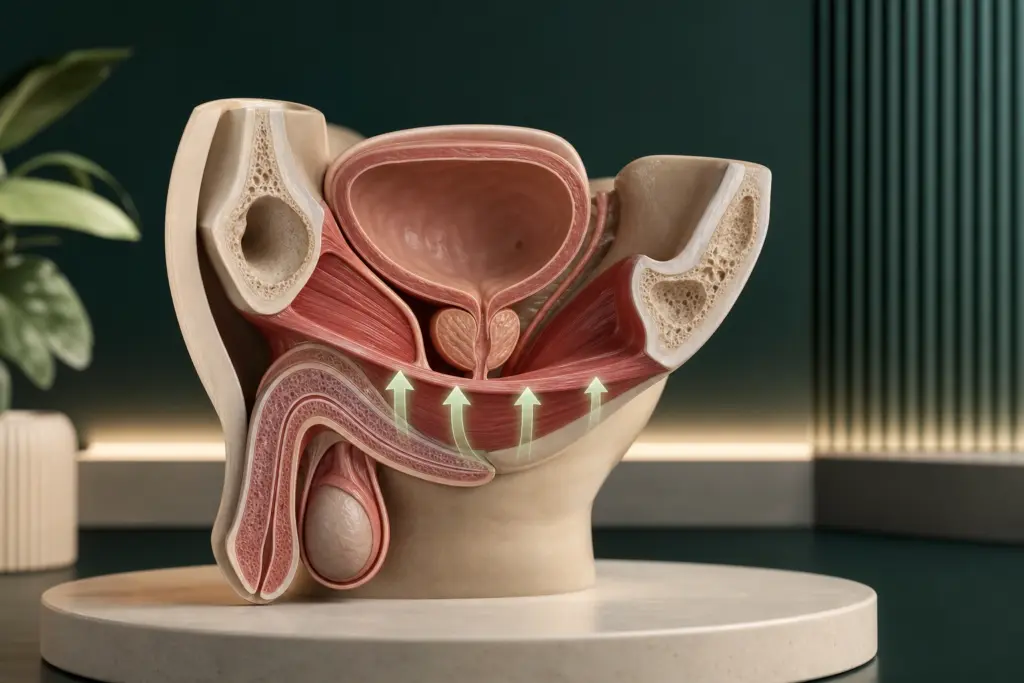
The pelvic floor muscles play an important role in bladder control, bowel function, sexual function and the ability to empty the bladder effectively. When these muscles are weak, overactive or poorly coordinated, they can contribute to a range of symptoms including urinary leakage, urgency, pelvic pain and difficulty passing urine.
Mr Gidon Ellis works closely with specialist pelvic floor physiotherapists where appropriate, ensuring patients receive a comprehensive approach to managing lower urinary tract symptoms and pelvic health conditions.
What is pelvic floor physiotherapy?
The pelvic floor is a group of muscles that support the bladder and bowel and help control the release of urine.
Pelvic floor physiotherapy involves assessment and treatment of these muscles to improve:
- Awareness and control
- Strength
- Relaxation
- Coordination
Treatment is individualised and depends on whether the pelvic floor muscles are weak, overly tense or not working in a coordinated way. Importantly, pelvic floor problems are not always caused by weakness. Some men have excessive pelvic floor muscle tension or difficulty relaxing the muscles during urination, where strengthening exercises alone may not be appropriate.
What conditions can pelvic floor physiotherapy help?
Urinary incontinence
Pelvic floor physiotherapy is particularly valuable for men experiencing urinary leakage.
This may include:
- Stress urinary incontinence (leakage during exercise, coughing or lifting)
- Leakage after prostate surgery
Improving pelvic floor muscle strength and control can help support the urinary sphincter and improve bladder control.
Voiding symptoms (weak stream, hesitancy and difficulty emptying the bladder)
Some men have difficulty relaxing the pelvic floor during urination. This can contribute to:
- Hesitancy
- Intermittent urinary stream
- A feeling of incomplete emptying
Physiotherapy can help improve coordination between the bladder muscle and pelvic floor, allowing more effective bladder emptying.
Overactive bladder symptoms
Some men experience:
- Frequent urination
- Urinary urgency (difficulty postponing urination)
- Urgency-related leakage
Pelvic floor techniques, bladder retraining and behavioural strategies can help improve bladder control and reduce urgency.
Chronic pelvic pain syndrome and prostatitis symptoms
Pelvic floor muscle dysfunction is increasingly recognised as a contributor to chronic pelvic pain symptoms.
Physiotherapy may help men with:
- Pelvic discomfort
- Perineal pain
- Pain associated with ejaculation
- Pelvic muscle tension
- Difficulty relaxing the pelvic floor
In these patients, treatment often focuses on muscle relaxation, stretching, breathing techniques and improving coordination rather than simply strengthening exercises.
Pelvic floor physiotherapy after prostate surgery
Following prostate surgery, particularly procedures for prostate cancer, some men experience urinary leakage.
Pelvic floor rehabilitation can help improve recovery by:
- Teaching correct pelvic floor muscle activation
- Improving bladder control
- Supporting return to normal activities
Starting exercises at the appropriate time and performing them correctly is important for the best results.
What happens during pelvic physiotherapy?
A specialist pelvic floor physiotherapist will usually begin with a detailed assessment, including:
- Discussion of urinary and pelvic symptoms
- Assessment of bladder habits
- Review of previous treatments
- Assessment of pelvic floor muscle function where appropriate
Treatment may include:
Pelvic floor muscle exercises
When appropriate, exercises can improve pelvic floor strength and support urinary control.
Biofeedback
Biofeedback uses sensors and computer-based feedback to help patients understand how their pelvic floor muscles are working. It can help identify whether muscles are being activated correctly and improve awareness, coordination and control. This can be particularly helpful for men who struggle to correctly contract or relax their pelvic floor muscles.
Bladder retraining
Bladder retraining involves techniques to gradually improve bladder control, increase the time between toilet visits and reduce urgency.
It may include:
- Timed voiding strategies
- Techniques to suppress urgency
- Advice on fluid intake and bladder habits
Relaxation and coordination techniques
For men with pelvic floor tension or difficulty relaxing during urination, treatment may focus on:
- Breathing techniques
- Muscle relaxation
- Stretching
- Improving coordination between the bladder and pelvic floor
Lifestyle advice
This may include advice regarding:
- Fluid intake
- Caffeine and alcohol
- Constipation management
- Posture and daily habits
The aim is not simply to strengthen muscles, but to restore normal pelvic floor function.
When is pelvic physiotherapy not the right treatment?
Pelvic floor physiotherapy is not a treatment for every urinary symptom. For example, if urinary symptoms are caused by significant bladder outlet obstruction from an enlarged prostate, the underlying obstruction may need to be treated directly.
Similarly, men with urinary retention require careful assessment to determine the cause before starting treatment. A specialist assessment helps ensure that pelvic physiotherapy is recommended when it is likely to provide benefit.
Why choose Mr Ellis?
Lower urinary tract symptoms often have multiple contributing factors involving the prostate, bladder and pelvic floor. Mr Ellis takes a comprehensive approach to diagnosis and treatment, recognising that the best outcomes often come from combining different approaches rather than relying on a single treatment. Where appropriate, he works alongside specialist pelvic floor physiotherapists as part of a personalised treatment plan.
Pelvic floor physiotherapy at a glance
| Used for | Urinary leakage, urgency, pelvic pain and pelvic floor dysfunction |
|---|---|
| Suitable for | Men with weakness, tension or poor coordination of pelvic floor muscles |
| Assessment | Specialist physiotherapy assessment and symptom review |
| Treatment | Exercises, biofeedback, bladder retraining, relaxation techniques and behavioural strategies |
| Anaesthetic | None |
| Recovery | Gradual improvement over weeks to months |
Frequently asked questions
Do pelvic floor exercises help men?
Yes. The pelvic floor muscles are important for urinary control in men as well as women. Correctly performed exercises can improve bladder control, particularly after prostate surgery.
Should every man with urinary symptoms do pelvic floor exercises?
Not necessarily. Some men have pelvic floor muscle overactivity or poor relaxation, where strengthening exercises alone may worsen symptoms. Assessment helps determine the correct approach.
What is pelvic floor biofeedback?
Biofeedback provides real-time information about pelvic floor muscle activity, helping patients learn how to activate or relax the correct muscles. It is particularly useful when coordination or awareness is the main problem.
Can pelvic physiotherapy treat an enlarged prostate?
No. Pelvic physiotherapy cannot reduce prostate size or remove a physical blockage caused by an enlarged prostate. However, it may help with associated symptoms in selected patients.
How long does pelvic physiotherapy take to work?
Improvement varies depending on the problem being treated. Many patients notice gradual improvement over several weeks to months with consistent practice.
Arrange a consultation
If you are experiencing urinary symptoms, pelvic discomfort or bladder control problems, Mr Gidon Ellis can assess whether pelvic floor physiotherapy may form part of your treatment plan. A specialist assessment helps identify the underlying cause of symptoms and ensures that treatment is tailored to your individual needs.