

Mr Gidon Ellis is a Consultant Urological Surgeon in London specialising in the assessment and treatment of male urinary symptoms, including weak urine flow. He provides comprehensive diagnostic assessment to identify the underlying cause and offers the full range of evidence-based treatments, from medication through to minimally invasive surgery.
A weak urine flow is one of the most common urinary symptoms experienced by men, particularly as they get older. Although an enlarged prostate is a frequent cause, it is not the only explanation. A careful assessment is important to establish the underlying cause and determine the most appropriate treatment.
What is a weak urine flow?
A weak urine flow means that the stream of urine is slower or less forceful than normal. Some men notice that it takes longer to empty their bladder, while others have difficulty starting urination, need to strain, or experience a stop-start stream. A weak urine flow may develop gradually over many years or appear more suddenly, depending on the underlying cause.
What causes a weak urine flow?
- A weak urine flow is a symptom rather than a diagnosis. It usually occurs because either:
- There is resistance to urine leaving the bladder (known as bladder outlet obstruction), or
- The bladder muscle is not contracting strongly enough to empty the bladder effectively.
- The most common causes include:
Enlarged prostate (benign prostatic hyperplasia)
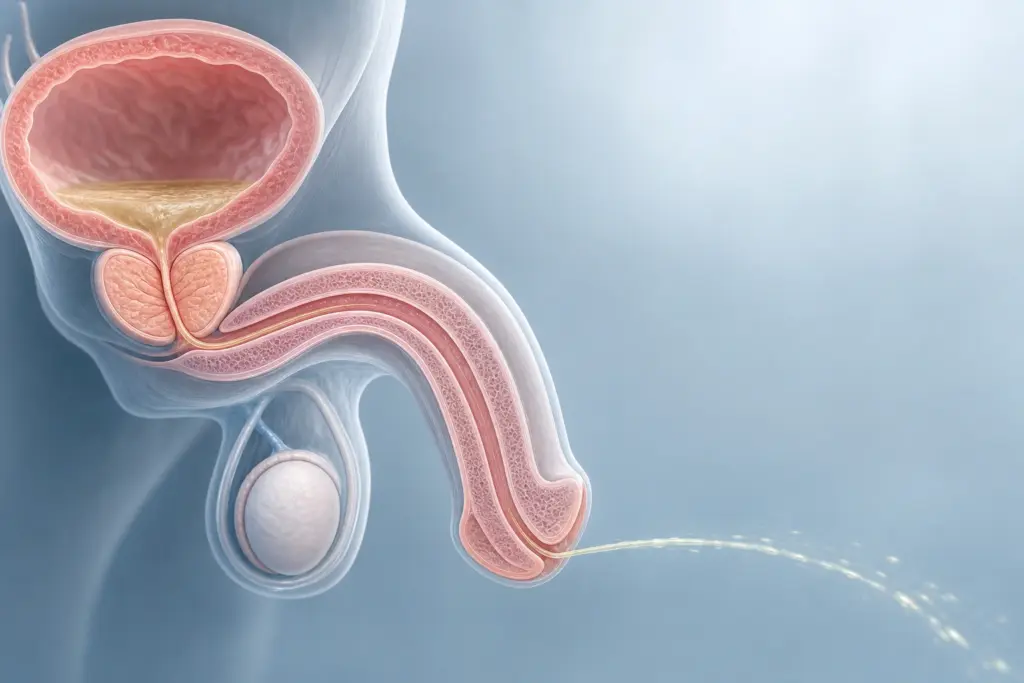
By far the most common cause of a weak urinary stream in men over 50 is an enlarged prostate. As the prostate enlarges, it can compress the urethra (the tube carrying urine from the bladder), causing bladder outlet obstruction and reducing the flow of urine.
Underactive bladder
In some men, the bladder muscle becomes weaker and is unable to contract with enough force to empty the bladder effectively. This can lead to a slow urinary stream, prolonged emptying and a feeling that the bladder has not emptied fully.
Urethral stricture
A urethral stricture is a narrowing of the urethra caused by scar tissue. This restricts the flow of urine and may develop following previous surgery, infection, injury or inflammation.
Other causes
- Less commonly, a weak urinary stream may be caused by:
- Bladder neck narrowing
- Urinary tract infection
- Certain medications
- Neurological conditions affecting bladder function
- Previous pelvic surgery or radiotherapy
Although an enlarged prostate is the commonest cause, it is important not to assume that every weak urinary stream is caused by BPH. Identifying the underlying cause is the key to choosing the most appropriate treatment.
What other symptoms may occur?
- A weak urine flow is often accompanied by other lower urinary tract symptoms, including:
- Difficulty starting urination
- Straining to pass urine
- A stop-start urinary stream
- A feeling that the bladder has not emptied completely
- Dribbling after passing urine
- Frequent urination
- Urgency
- Waking at night to pass urine (nocturia)
These symptoms can significantly affect quality of life but are often very treatable once the underlying cause has been identified.
When should I seek medical advice?
You should arrange an assessment if your urine flow is becoming progressively weaker, your symptoms are affecting your daily life or you are concerned about your bladder function.
- You should seek urgent medical attention if you:
- Are unable to pass urine
- Develop severe lower abdominal pain with difficulty passing urine
- Have fever or feel unwell with urinary symptoms
- Notice visible blood in the urine
How is a weak urine flow investigated?
The most important step is identifying why your urine flow has become weaker. During your consultation, Mr Ellis will discuss your symptoms, medical history and any relevant previous surgery, infections or medications that may be contributing.
- Investigations may include:
- Uroflowmetry - a urine flow test that measures the speed and pattern of your urinary stream
- Bladder scan - a quick ultrasound to check how well the bladder is emptying and whether any urine is left behind after passing water
- Urine testing - to check for infection or other abnormalities
- Blood tests, including a PSA test where appropriate, to assess prostate and kidney function
- Prostate assessment, including a digital rectal examination and, where needed, imaging of the prostate
- Flexible cystoscopy - direct inspection of the urethra and bladder using a thin camera, particularly if a stricture or other structural cause is suspected
- Urodynamic studies in selected patients, to distinguish between outlet obstruction and an underactive bladder
Not every patient requires every test. The assessment is tailored to your symptoms and initial findings.
Frequently asked questions
What is a weak urine flow?
A weak urine flow means the stream of urine is slower or less forceful than normal. Some men also notice it takes longer to empty their bladder, have difficulty starting, need to strain, or experience a stop-start stream.
How quickly can I be seen?
Appointments are arranged as quickly as possible, with urgent symptoms prioritised.
Where can I find more information on urinary issues?
For additional information, you can visit the NHS website, which offers resources on urinary health.
Do I need a GP referral?
No referral is necessary for a private consultation. You can self-refer, and we can liaise with your GP afterward if needed.