

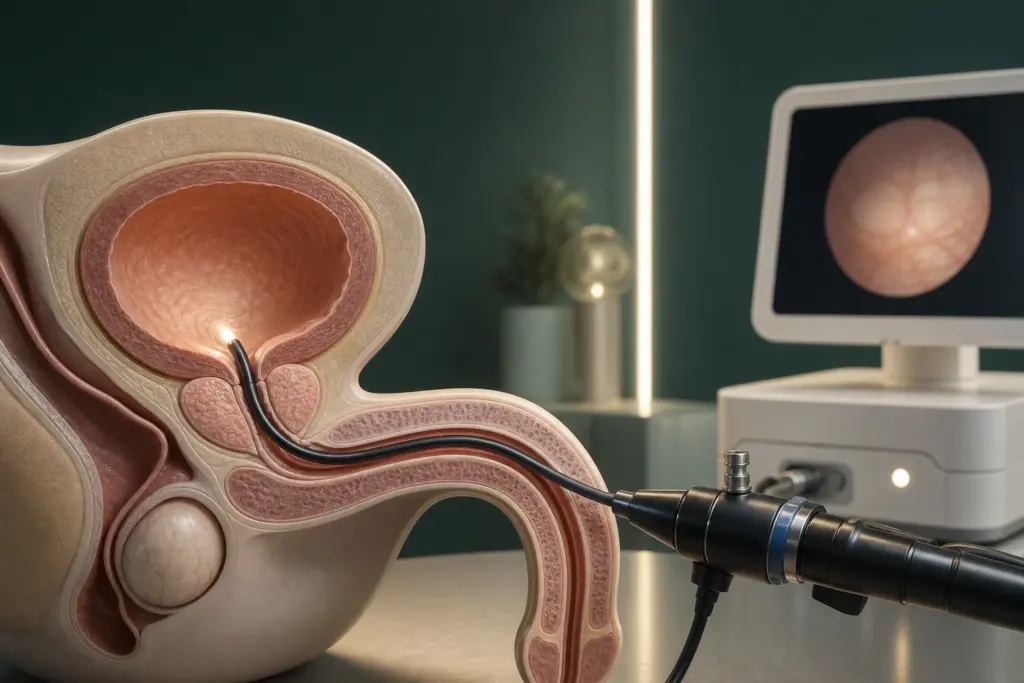
A minimally invasive procedure to examine the urethra and bladder
Mr Gidon Ellis is a Consultant Urological Surgeon in London specialising in the diagnosis and treatment of conditions affecting the bladder, urethra and urinary tract. Cystoscopy is a procedure that allows the inside of the urethra and bladder to be examined using a small telescope. It is commonly used to investigate blood in the urine, recurrent urinary tract infections and unexplained urinary symptoms.
There are two main types of cystoscopy:
- Flexible cystoscopy – usually performed as an outpatient procedure using local anaesthetic gel.
- Rigid cystoscopy – usually performed in theatre under general or regional anaesthetic and can allow additional procedures or treatments to be carried out at the same time.
The most appropriate approach depends on why the cystoscopy is required and whether treatment is anticipated.
Why might I need a cystoscopy?
Cystoscopy may be recommended to investigate or monitor:
- Blood in the urine (haematuria)
- Recurrent urinary tract infections
- Difficulty passing urine
- Suspected urethral stricture
- Persistent or unexplained urinary symptoms
- Bladder stones
- Abnormalities identified on ultrasound or CT
- Suspected or previously diagnosed bladder cancer
Cystoscopy allows the bladder and urethra to be examined directly and can sometimes identify problems that cannot be diagnosed from scans or urine tests alone.
Related: Blood in the Urine (Haematuria)
Related: Urinary Tract Infections
Related: Bladder Cancer
Flexible cystoscopy
Flexible cystoscopy is usually performed as an outpatient procedure using local anaesthetic gel. A fine, flexible telescope is passed through the urethra into the bladder. You remain awake throughout and can normally go home immediately afterwards. The examination usually takes only a few minutes.
You may experience some pressure, a sensation of needing to pass urine or mild discomfort, but most patients tolerate the procedure well. Flexible cystoscopy is particularly useful when the aim is to examine the urethra and bladder and no significant treatment is anticipated.
Rigid cystoscopy
Rigid cystoscopy is usually performed in an operating theatre under general or regional anaesthetic. The rigid telescope allows the surgeon to examine the bladder and urethra and, where necessary, perform additional procedures at the same time.
These may include:
- Taking a biopsy of an abnormal area
- Removing a bladder stone
- Treating or resecting a bladder tumour
- Treating selected urethral abnormalities
- Other procedures within the bladder or urethra
The exact procedure depends on the reason for the cystoscopy and what is found.
What happens after cystoscopy?
After flexible cystoscopy, you can usually return home immediately and resume normal activities. Mild burning when passing urine, increased frequency or a small amount of blood in the urine can occur for a day or two.
After rigid cystoscopy, recovery depends on whether any additional procedure was performed. You may experience some discomfort or blood in the urine for several days, and any activity restrictions will depend on the treatment undertaken.
What are the risks?
Cystoscopy is generally safe, but possible complications include:
- Temporary burning or discomfort when passing urine
- Blood in the urine
- Urinary tract infection
- Temporary difficulty passing urine
- Urethral injury or, rarely, urethral stricture
- Bladder injury, which is uncommon
The risks associated with rigid cystoscopy also depend on any additional procedure and the anaesthetic required. Your individual risks will be discussed before the procedure.
Frequently asked questions
Is flexible cystoscopy painful?
Most patients describe flexible cystoscopy as uncomfortable rather than painful. Local anaesthetic gel is used to reduce discomfort and the examination usually takes only a few minutes.
Do I need an anaesthetic for cystoscopy?
Flexible cystoscopy is usually performed with local anaesthetic gel while you are awake. Rigid cystoscopy is usually performed under general or regional anaesthetic because it is carried out in theatre and may involve additional treatment.
Can cystoscopy find bladder cancer?
Yes. Cystoscopy allows the bladder lining to be examined directly and is an important investigation when bladder cancer is suspected. If a suspicious area is identified, a biopsy or further treatment may be required.
Can cystoscopy find a urethral stricture?
Yes. Cystoscopy allows the urethra to be examined directly and can identify narrowing or scarring caused by a urethral stricture.
Related: Urethral Stricture
Is blood in the urine normal after cystoscopy?
A small amount of blood in the urine can occur following cystoscopy, particularly during the first day or two. Heavy bleeding, difficulty passing urine, fever or worsening pain should be assessed promptly.
Arrange a consultation
If you have been advised that you need a cystoscopy, or are experiencing unexplained urinary symptoms, blood in the urine or recurrent urinary tract infections, Mr Gidon Ellis offers specialist assessment and cystoscopy in London. A consultation provides an opportunity to discuss why cystoscopy is recommended, whether flexible or rigid cystoscopy is most appropriate and what to expect from the procedure.