

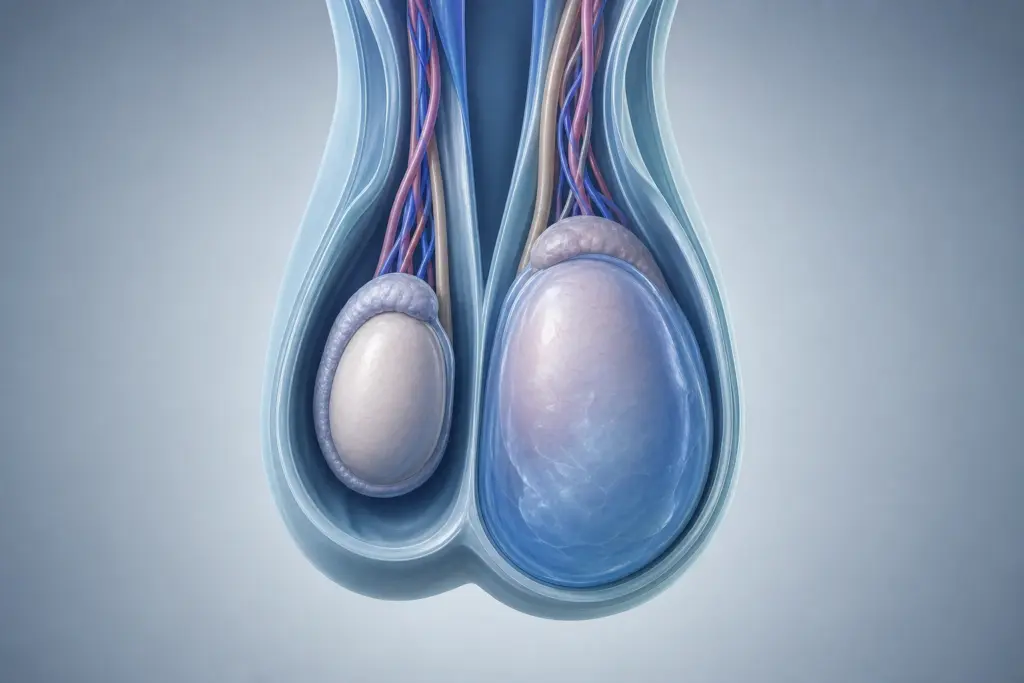
Scrotal swelling
Scrotal swelling is a common symptom with a number of possible causes. It may develop gradually or suddenly and can affect one or both sides of the scrotum. Many causes are benign and straightforward to treat, but new or unexplained scrotal swelling should be assessed, particularly if it is associated with pain, a change in the testicle or other symptoms.
Overview
The scrotum contains the testicles, epididymis and structures that support them. Swelling may arise from the testicle itself, the epididymis, the coverings around the testicle or the structures within the spermatic cord.
- Common causes include:
- Hydrocoele (hydrocele) - a collection of fluid around the testicle
- Epididymal cyst or spermatocele
- Varicocele - enlarged veins around the testicle
- Epididymitis or other infection
- Inguinal or scrotal hernia
- Trauma
- Less commonly, a testicular tumour
Sometimes the swelling is painless, while other conditions cause significant discomfort or pain.
Common causes of scrotal swelling
Hydrocoele
A hydrocoele is a collection of fluid around the testicle. It typically causes a smooth, painless enlargement of one side of the scrotum. Hydrocoeles are usually benign but can become large or uncomfortable.
Epididymal cyst
An epididymal cyst is a fluid-filled cyst arising from the epididymis, the structure attached to the back of the testicle. These are common and usually harmless. Larger cysts can sometimes cause discomfort or a sensation of heaviness.
Varicocele
A varicocele is an enlargement of the veins within the scrotum. It is more commonly found on the left side and may cause a dragging or aching sensation. Varicoceles can sometimes be associated with fertility problems, although many require no treatment.
Infection
Infection of the epididymis or testicle can cause swelling, pain, tenderness and sometimes fever or urinary symptoms. Treatment depends on the underlying cause and may include antibiotics and supportive measures.
Hernia
An inguinal hernia occurs when tissue from within the abdomen pushes through a weakness in the abdominal wall. It can extend into the scrotum and cause swelling or a lump that may become more prominent when standing, coughing or straining.
Testicular tumour
A testicular tumour can sometimes present as a painless lump or change in the size or consistency of the testicle. Testicular cancer is uncommon, accounting for around 1% of all cancers in men in the UK, with an incidence of roughly 7 cases per 100,000 men according to national cancer registry data. Even so, a new lump or persistent change within the testicle should always be assessed.
When to seek urgent advice
Sudden, severe testicular or scrotal pain, particularly when accompanied by swelling, requires urgent assessment. One important cause is testicular torsion, where the blood supply to the testicle becomes twisted and compromised. This requires emergency treatment because the testicle can be permanently damaged if its blood supply is not restored promptly.
- Urgent assessment is also appropriate if scrotal swelling is associated with:
- Severe or rapidly worsening pain
- Nausea or vomiting
- Fever or feeling significantly unwell
- A testicle that appears unusually high or has changed position
- Significant trauma
Do not assume that sudden painful swelling is simply an infection.
How we investigate scrotal swelling
A detailed history and examination will usually provide important clues about the cause of the swelling. Depending on the findings, investigations may include:
Scrotal ultrasound
An ultrasound scan is the main investigation for unexplained scrotal swelling or a testicular lump.
- It can distinguish between:
- Fluid around the testicle
- Epididymal cysts
- Varicoceles
- Inflammation or infection
- Changes within the testicle itself
It can also assess blood flow to the testicle when torsion or another vascular problem is suspected.
Urine tests
Urine testing may be appropriate when infection or urinary symptoms are present.
Further investigations
- If a testicular tumour is suspected, additional tests may include:
- Blood tests for tumour markers - AFP, beta-hCG and LDH, which can be raised in some testicular cancers and help guide diagnosis and monitoring
- Staging scans, such as a CT scan of the chest, abdomen and pelvis, if cancer is confirmed or strongly suspected, to check whether it has spread
Not every scrotal swelling requires extensive investigation. Many, such as small hydrocoeles or cysts, are diagnosed on examination and ultrasound alone, with further tests reserved for cases where a tumour or other significant pathology is suspected.
Frequently asked questions
What should I do if I notice a scrotal swelling?
If you notice a scrotal swelling, it is important to consult a medical professional. Early assessment can lead to better outcomes and peace of mind.
How quickly can I be seen?
Appointments are arranged as quickly as possible, with urgent symptoms prioritised.
Do you accept my insurance?
Yes, we work with all major UK insurers. Please bring your policy and authorisation number to your appointment.
Will I see a consultant?
Yes, you’ll be seen by Mr Gidon Ellis directly at every appointment, ensuring you receive personalised care.
Do I need a GP referral?
Not for a private consultation. You are welcome to self-refer, and we can liaise with your GP afterwards if needed.
Where will I be seen?
You can choose from Welbeck London, The Wellington Hospital, or Royal Free London, whichever is most convenient for you.
How should I prepare for my appointment?
If your pain is sudden and severe, please seek emergency care immediately rather than waiting for an appointment.