

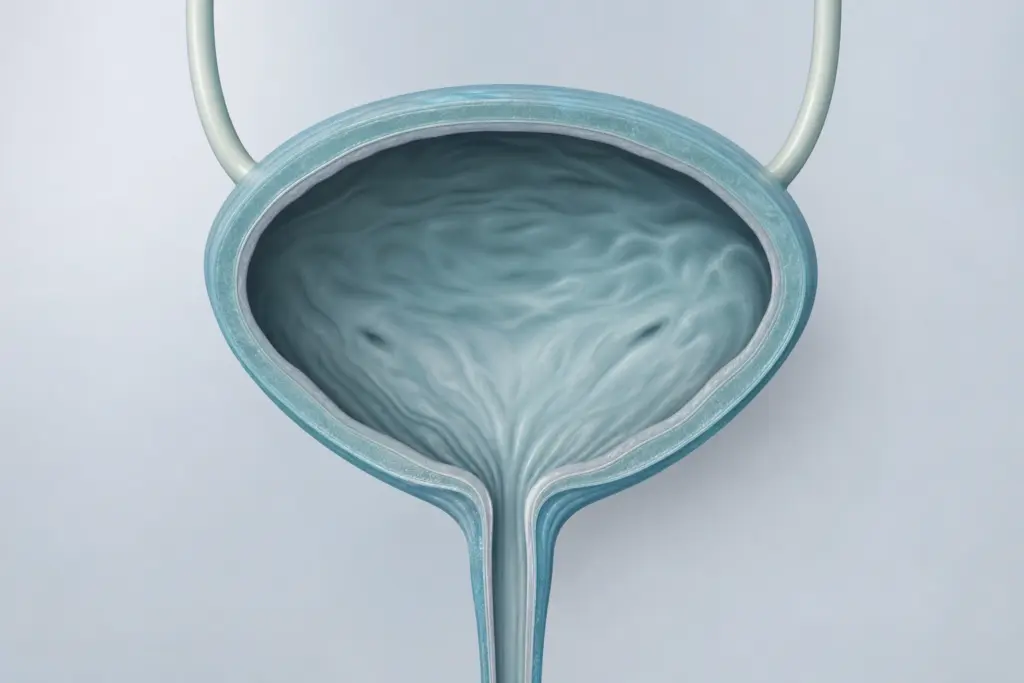
When the bladder does not contract strongly enough to empty effectively
Underactive bladder is a condition where the bladder muscle does not generate enough strength or sustained contraction to empty urine effectively. This can lead to a slow urinary stream, difficulty emptying the bladder and increasing amounts of urine remaining after urination.
Underactive bladder is an important but sometimes overlooked cause of lower urinary tract symptoms (LUTS). Although many men with poor bladder emptying have an enlarged prostate, some have symptoms because the bladder muscle itself is not working effectively. Mr Gidon Ellis specialises in the assessment of male urinary symptoms, including difficulty emptying the bladder, urinary retention and conditions affecting bladder function.
What is underactive bladder?
The bladder muscle (known as the detrusor muscle) contracts when you pass urine, generating pressure that pushes urine out through the urethra. In underactive bladder, the bladder muscle contraction is reduced or not sustained for long enough. As a result, the bladder may not empty completely.
This can lead to:
- Residual urine remaining in the bladder
- A sensation of incomplete emptying
- Increased frequency of urination
- Recurrent urinary tract infections
- Chronic urinary retention in some cases
What causes an underactive bladder?
There are several possible causes.
Age-related changes
As men and women get older, the strength and efficiency of the bladder muscle can reduce.
Long-standing bladder outlet obstruction
In some men, years of obstruction from an enlarged prostate can cause the bladder muscle to work harder than normal. Over time, the bladder may become thickened, less flexible and eventually less effective at generating a strong contraction.
Diabetes
Diabetes can affect the nerves supplying the bladder and reduce bladder sensation and contraction.
Neurological conditions
Conditions affecting the nervous system can interfere with communication between the brain, nerves and bladder.
Previous pelvic surgery or treatments
Some operations or treatments involving the pelvis can affect bladder nerve function.
Sometimes no clear cause is identified
In some patients, despite appropriate assessment, the exact reason for reduced bladder function is unclear.
What symptoms can underactive bladder cause?
Symptoms often relate to difficulty emptying the bladder.
These may include:
- A slow urinary stream
- Difficulty starting urination
- Needing to strain to pass urine
- A stop-start stream
- A feeling that the bladder has not emptied
- Returning to the toilet shortly after urinating
- Passing small amounts of urine frequently
- Increased residual urine on bladder scan
- Urinary retention
Some patients may not experience severe symptoms despite having significant residual urine, which is why assessment is important.
Preventing deterioration in bladder function
The bladder is a muscle, and like any muscle it can be affected by working against excessive resistance over a prolonged period. In men with bladder outlet obstruction, such as that caused by an enlarged prostate, the bladder has to generate higher pressures to push urine through the narrowed outlet. Over time, this increased workload can lead to changes in bladder structure and function.
Not every man with prostate enlargement will develop bladder weakness, but significant or longstanding obstruction can contribute to reduced bladder contractility in some patients.
This is why early assessment of bothersome urinary symptoms is important. Identifying and treating significant bladder outlet obstruction – when appropriate – may help prevent progression to more advanced bladder dysfunction. Treatment decisions are individualised and depend on factors such as symptom severity, prostate size, urinary flow, residual urine volume and overall bladder function.
How is underactive bladder diagnosed?
The diagnosis can be challenging because the symptoms overlap with bladder outlet obstruction caused by an enlarged prostate.
Assessment usually includes:
Clinical assessment
A detailed discussion of symptoms helps understand whether problems are related to bladder storage, bladder emptying or both.
Uroflowmetry (urine flow test)
This measures the speed and pattern of urinary flow. A slow flow may be caused by either obstruction or reduced bladder contraction.
Bladder scan
A bladder scan after urination measures the post-void residual urine volume — the amount of urine left behind. This is a simple and important assessment of bladder emptying.
Prostate assessment
Assessment of prostate size and symptoms helps determine whether bladder outlet obstruction is contributing.
Specialist bladder function testing
In some patients, urodynamic testing may be recommended to distinguish between:
- Bladder outlet obstruction
- Underactive bladder
- A combination of both
Where required, Mr Ellis can arrange referral for specialist bladder function testing.
How is underactive bladder treated?
Treatment depends on the severity of symptoms, the amount of residual urine and the underlying cause.
Treating bladder outlet obstruction if present
Some patients have both an enlarged prostate and reduced bladder function. If significant obstruction is contributing, treatment of the obstruction (such as HoLEP, Aquablation or TURP) may improve emptying in selected patients. However, if the bladder muscle itself is significantly weakened, removing the obstruction may not completely restore normal bladder function.
Optimising bladder habits
Strategies may include:
- Adjusting fluid intake
- Timed voiding
- Avoiding excessive bladder overfilling
- Managing constipation
Catheter-based bladder management
In patients with significant chronic retention, intermittent self-catheterisation or other catheter-based strategies may occasionally be required to ensure safe bladder emptying.
Medication
Unlike an enlarged prostate or overactive bladder, there are currently limited medications that reliably improve bladder muscle strength. Treatment is therefore usually focused on identifying and addressing contributing factors and protecting bladder and kidney function.
Can underactive bladder be cured?
Unlike some urinary conditions, underactive bladder does not always have a treatment that restores normal bladder muscle strength. In some patients, bladder function may improve if an underlying cause is identified and treated. For example, relieving bladder outlet obstruction caused by an enlarged prostate may improve emptying in selected men.
However, when the bladder muscle has become permanently weakened or the nerves controlling the bladder have been affected, recovery may be limited. In these situations, treatment focuses on helping the bladder empty as effectively and safely as possible, preventing complications and maintaining quality of life.
Can underactive bladder damage the kidneys?
In some cases, yes. If the bladder cannot empty effectively, urine can build up and create increased pressure within the urinary tract. This may lead to complications including recurrent infections and, in severe cases, pressure-related kidney damage.
Chronic retention is particularly important to assess when associated with:
- Large residual urine volumes
- Recurrent infections
- Reduced kidney function
- Swelling of the kidneys (hydronephrosis)
Early assessment helps identify patients who require intervention to protect long-term urinary health.
Why choose Mr Ellis?
Difficulty emptying the bladder can have several different causes, and it is important to distinguish bladder weakness from blockage. Mr Ellis provides specialist assessment of male lower urinary tract symptoms, using targeted investigations to understand whether symptoms are caused by prostate enlargement, urethral narrowing, bladder dysfunction or pelvic floor problems.
Treatment recommendations are personalised, with realistic discussion of what can and cannot be improved, balancing symptom relief with long-term bladder and kidney health.
Underactive bladder at a glance
| Also called | Weak bladder muscle, detrusor underactivity |
|---|---|
| Main problem | Reduced bladder contraction during urination |
| Symptoms | Slow flow, incomplete emptying, residual urine, retention |
| Investigated with | Flow test, bladder scan, prostate assessment and specialist bladder testing where required |
| Treatment | Addressing underlying causes, bladder management strategies and catheter-based treatments when necessary |
| Anaesthetic | Depends on treatment |
Frequently asked questions
Is underactive bladder the same as urinary retention?
No. Underactive bladder is a cause of poor bladder emptying and can lead to chronic urinary retention, but the two terms describe different things.
Is underactive bladder caused by an enlarged prostate?
Not always. An enlarged prostate can contribute, but some patients have reduced bladder muscle function without significant obstruction.
Will prostate surgery fix an underactive bladder?
It depends. If bladder outlet obstruction is contributing, treating the obstruction may improve emptying. However, a severely weakened bladder muscle may not recover fully.
Will my bladder function return to normal?
This depends on the underlying cause. Some patients improve when contributing factors are treated, but established underactive bladder may not fully recover. The aim of treatment is to optimise emptying, reduce complications and maintain quality of life.
Can the bladder muscle become stronger again?
This depends on the cause and severity. Some patients improve by treating contributing factors and optimising bladder function, while others require long-term management strategies.
Arrange a consultation
If you have difficulty emptying your bladder, a weak urinary stream or concerns about urinary retention, Mr Gidon Ellis can provide specialist assessment to identify the underlying cause and discuss appropriate treatment options.