

A minimally invasive treatment designed to reduce urethral stricture recurrence
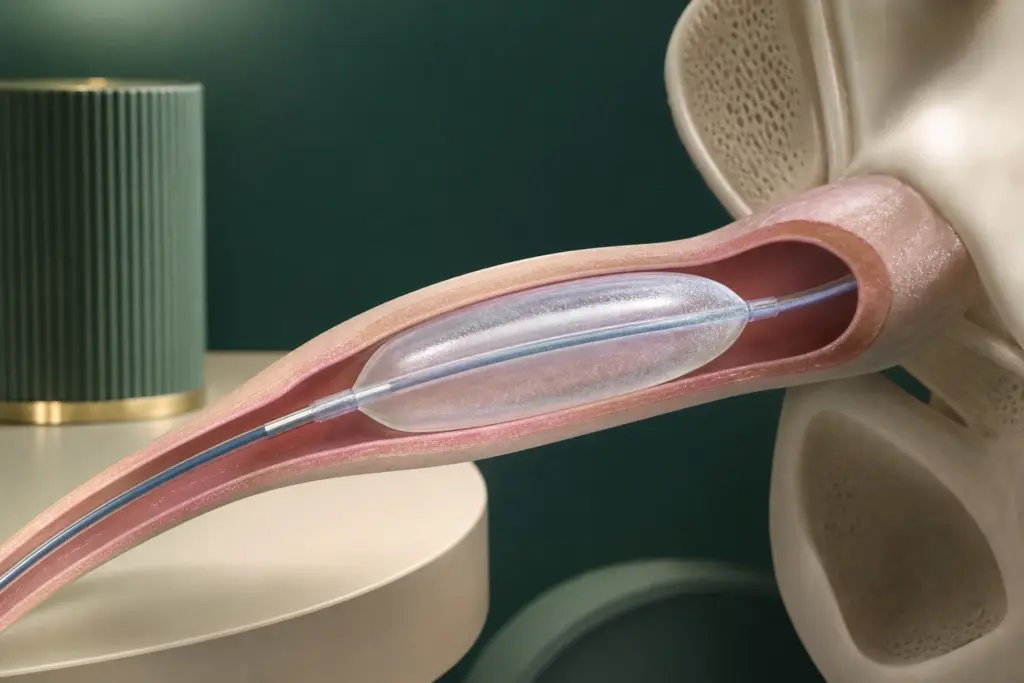
Optilume® is an innovative minimally invasive treatment for urethral stricture disease. It combines balloon dilatation of the narrowed urethra with targeted delivery of a medication designed to reduce the formation of new scar tissue.
The procedure is performed through the natural urinary passage, without any external cuts, and aims to improve urinary flow while reducing the likelihood of the stricture returning. Mr Gidon Ellis specialises in endourology and the minimally invasive management of urinary tract conditions, including urethral strictures.
What is a urethral stricture?
A urethral stricture occurs when scar tissue develops within the urethra, causing narrowing of the urine passage.
This can restrict urinary flow and lead to symptoms including:
- A weak urinary stream
- Difficulty starting urination
- Straining to pass urine
- A stop-start flow
- A sensation of incomplete bladder emptying
- Urinary retention
Treatment depends on the location, length and complexity of the stricture, as well as previous treatments.
What is Optilume?
Optilume is a drug-coated balloon treatment for urethral strictures. During the procedure, a specialised balloon is passed through the urethra and positioned within the narrowed area. The balloon is then expanded to gently open the stricture.
The surface of the balloon is coated with Paclitaxel, a medication that helps reduce excessive scar tissue formation following treatment. The aim is to improve the durability of treatment compared with balloon dilatation alone.
How is Optilume performed?
Optilume is an endoscopic procedure performed through the urinary passage, usually carried out under general or spinal anaesthetic as a day-case procedure.
Typically:
- A small telescope or imaging guidance is used to assess the stricture.
- The drug-coated balloon is positioned across the narrowed area.
- The balloon is expanded to open the scarred segment.
- The treatment is completed without any external incision.
A temporary urinary catheter is often required afterwards to allow the urethra to heal.
Why patients choose Optilume
Potential advantages of Optilume include:
- Minimally invasive treatment
- No external cuts or scars
- Usually performed as a day-case procedure
- May reduce the likelihood of stricture recurrence compared with standard dilatation alone
- Can be considered for selected patients who have recurrent strictures
Who is suitable for Optilume?
Optilume is not suitable for every urethral stricture.
The best candidates are usually patients with:
- Shorter urethral strictures
- Suitable stricture location (particularly bulbar urethral strictures)
- Recurrent strictures following previous endoscopic treatment
The decision depends on careful assessment of:
- Stricture length
- Location
- Previous treatments
- Symptoms
- Patient preferences
For longer, complex or heavily scarred strictures, urethroplasty may provide a more durable reconstruction. Where this is the most appropriate option, Mr Ellis will discuss this and arrange referral to an experienced reconstructive urological surgeon.
Recovery after Optilume
Most patients return home on the same day. A catheter is commonly left temporarily following treatment. The duration depends on the characteristics of the stricture and the procedure performed.
It is normal to experience:
- Mild burning when passing urine
- A small amount of blood in the urine
- Temporary urinary frequency or urgency
These symptoms usually settle as healing takes place. Follow-up assessment helps confirm improvement in urinary symptoms and monitor for recurrence.
Can Optilume prevent a urethral stricture coming back?
No treatment completely eliminates the possibility of recurrence. Urethral strictures occur because scar tissue forms within the urethra, and some patients have a tendency to reform scar tissue despite treatment.
Clinical studies have shown that Optilume can reduce recurrence compared with standard balloon dilatation in appropriately selected patients. However, outcomes depend on individual factors including the cause, location and complexity of the stricture. Careful follow-up remains an important part of long-term management.
Optilume at a glance
| Full name | Optilume drug-coated balloon dilation |
|---|---|
| Treats | Selected urethral strictures |
| Technique | Endoscopic balloon treatment through the natural urinary passage |
| Medication used | Paclitaxel-coated balloon |
| Anaesthetic | Usually general or spinal anaesthetic |
| Hospital stay | Usually day case |
| Recovery | Usually days to a few weeks |
Frequently asked questions
Is Optilume a replacement for urethroplasty?
No. Optilume is an additional treatment option for selected patients with urethral strictures. Urethroplasty remains an important treatment for many longer, recurrent or complex strictures and may offer the most durable repair in these situations.
Is Optilume better than urethrotomy (OIU/DVIU)?
Optilume is a newer approach that combines dilation with drug delivery to reduce scar formation. Whether it is preferable depends on the individual stricture characteristics and previous treatment history.
Will I need a catheter after Optilume?
Most patients require a temporary catheter afterwards. The duration depends on the treatment details and the characteristics of the stricture.
Can Optilume be used for all urethral strictures?
No. Patient selection is important. The length, location and complexity of the stricture determine which treatment is most appropriate.
Why choose Mr Ellis?
Urethral stricture management requires careful assessment because urinary symptoms can overlap with other conditions, including enlarged prostate and bladder dysfunction. Mr Ellis combines specialist endourological expertise with a personalised approach, selecting minimally invasive treatments where appropriate while recognising when referral for reconstructive surgery may be required.
Arrange a consultation
If you have been diagnosed with a urethral stricture, have recurrent symptoms after previous treatment or are considering Optilume, Mr Gidon Ellis can provide specialist assessment and discuss the most appropriate treatment options.