

When the muscles involved in urination do not work together properly
Passing urine requires a carefully coordinated process. The bladder muscle must contract, while the muscles around the urethra and pelvic floor must relax to allow urine to flow. Pelvic floor dysfunction occurs when these muscles become overactive, tense or poorly coordinated, preventing normal emptying of the bladder.
This can result in symptoms that are similar to those caused by an enlarged prostate or urethral narrowing, including a weak stream, difficulty starting urination and a feeling of incomplete bladder emptying. Mr Gidon Ellis specialises in the assessment of male lower urinary tract symptoms (LUTS), including conditions affecting the prostate, bladder, urethra and pelvic floor.
What is pelvic floor dysfunction?
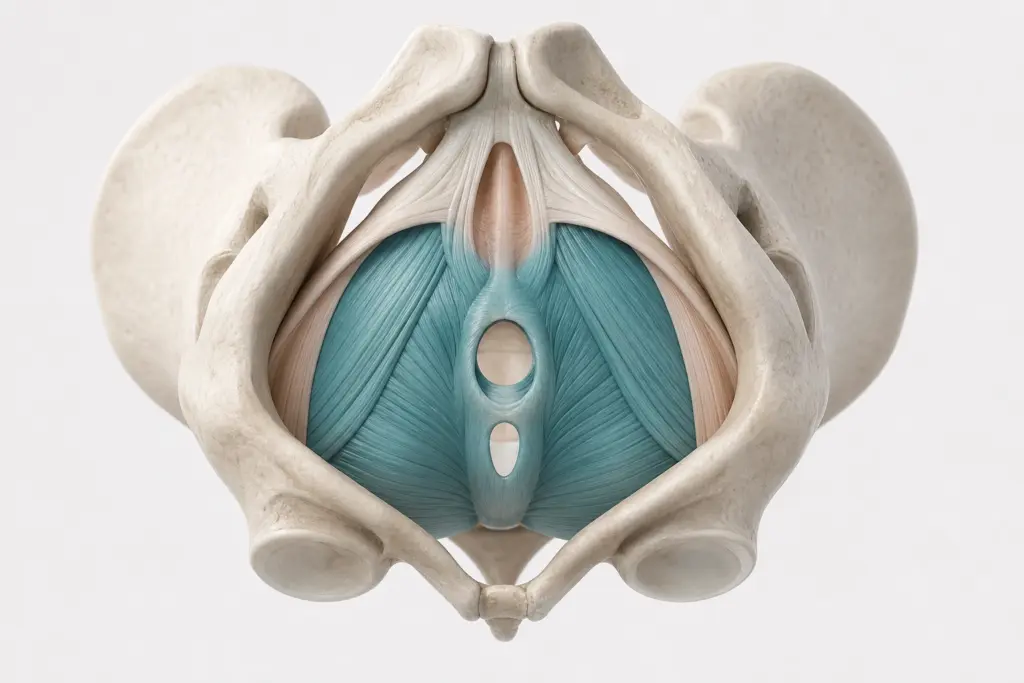
The pelvic floor is a group of muscles that support the bladder, bowel and pelvic organs. During urination, these muscles should relax to allow urine to pass freely.
In dysfunctional voiding, the pelvic floor muscles do not relax appropriately during urination. Instead, they may remain partially contracted, creating resistance to urine flow. This can lead to inefficient bladder emptying and increased effort when passing urine.
What causes pelvic floor dysfunction?
Pelvic floor dysfunction can develop for several reasons.
Learned patterns of urination
Some people develop habits of consciously or subconsciously tightening the pelvic floor when trying to control urinary symptoms. Over time, this can interfere with normal relaxation during voiding.
Chronic pelvic pain or pelvic floor tension
Conditions associated with pelvic discomfort, including chronic pelvic pain syndrome, can be associated with increased pelvic floor muscle activity.
Stress and muscle tension
The pelvic floor responds to stress in a similar way to other muscles in the body. Persistent tension may contribute to difficulty relaxing during urination.
Previous urinary symptoms
Men who have experienced urgency, pain, leakage or concerns about urinary control may unintentionally tighten their pelvic floor muscles, creating a cycle of tension and poor coordination.
Sometimes no clear cause is identified
Many patients do not have a single identifiable trigger.
What symptoms can pelvic floor dysfunction cause?
Symptoms can include:
- Difficulty starting urination
- A slow or intermittent urinary stream
- Needing to strain to pass urine
- A sensation of incomplete bladder emptying
- Urinary frequency and urgency
- Pelvic discomfort or pain
- Discomfort after urination
- Symptoms that fluctuate over time
Some patients describe a feeling that the bladder wants to empty but the urine does not flow easily.
How is pelvic floor dysfunction diagnosed?
Diagnosis begins with a careful assessment of symptoms.
It is important to distinguish pelvic floor dysfunction from other causes of urinary symptoms, including:
- Enlarged prostate and bladder outlet obstruction
- Urethral stricture
- Overactive bladder
- Underactive bladder
Investigations may include:
Uroflowmetry (urine flow test)
This assesses the speed and pattern of urinary flow. A stop-start or interrupted flow pattern may suggest difficulty relaxing the pelvic floor during urination.
Bladder scan
A bladder scan after urination measures the post-void residual urine volume and assesses how effectively the bladder is emptying.
Urine testing
Urine tests may be performed to exclude infection or other causes of urinary symptoms.
Specialist assessment
In selected patients, further specialist investigations may be considered, including assessment of bladder function. This may include referral for video urodynamics, a specialised test that combines bladder pressure measurements with real-time X-ray imaging to assess how the bladder and outlet behave during filling and voiding.
Where pelvic floor dysfunction is suspected, Mr Ellis works closely with experienced pelvic floor physiotherapists who can assess muscle function and provide targeted treatment.
How is pelvic floor dysfunction treated?
Treatment focuses on retraining the muscles involved in urination rather than simply strengthening them.
Pelvic floor physiotherapy
Specialist pelvic floor physiotherapy can help patients:
- Understand how the pelvic floor muscles function
- Learn to relax overactive muscles
- Improve coordination between bladder contraction and pelvic floor relaxation
- Reduce pelvic muscle tension
Biofeedback
Biofeedback uses monitoring techniques to help patients understand and control pelvic floor muscle activity. This can be particularly helpful when there is difficulty recognising when muscles are relaxed or contracted.
Bladder retraining and behavioural strategies
Treatment may include:
- Timed voiding strategies
- Optimising fluid intake
- Managing urgency symptoms
- Addressing constipation
- Reducing habits that increase pelvic floor tension
Treating associated conditions
If pelvic floor dysfunction occurs alongside another condition, such as bladder outlet obstruction or overactive bladder, treatment may need to address both problems.
Can pelvic floor dysfunction be cured?
Many patients improve significantly with appropriate assessment and targeted treatment. Unlike conditions caused by a fixed blockage, such as urethral stricture, pelvic floor dysfunction is often related to muscle coordination and tension. With retraining, many patients can learn to relax the pelvic floor appropriately and improve urinary symptoms.
Recovery varies depending on the duration and severity of symptoms and whether other bladder or prostate conditions are also present.
Why choose Mr Ellis?
Urinary symptoms can have several different causes, and it is important to identify the correct underlying problem before recommending treatment. Mr Ellis provides specialist assessment of male LUTS, considering the interaction between the prostate, urethra, bladder and pelvic floor. Where pelvic floor dysfunction is identified, he works with specialist pelvic floor physiotherapists to provide a coordinated approach focused on improving bladder function and quality of life.
Pelvic floor dysfunction at a glance
| Also called | Dysfunctional voiding, pelvic floor overactivity |
|---|---|
| Main problem | Poor relaxation and coordination of pelvic floor muscles during urination |
| Symptoms | Weak stream, difficulty starting, straining, incomplete emptying, urgency |
| Investigated with | Symptom assessment, flow test, bladder scan and specialist assessment where required |
| Treatment | Pelvic floor physiotherapy, biofeedback, bladder retraining and treatment of associated conditions |
| Anaesthetic | Not applicable |
Frequently asked questions
Is pelvic floor dysfunction the same as an enlarged prostate?
No. Both can cause difficulty passing urine, but the underlying problem is different. An enlarged prostate causes physical narrowing of the urinary channel, whereas pelvic floor dysfunction relates to poor muscle coordination.
Do I need pelvic floor strengthening exercises?
Not always. Many people associate pelvic floor exercises with strengthening muscles, but in dysfunctional voiding the problem is often excessive tension or failure to relax. Treatment focuses on coordination and relaxation rather than simply making the muscles stronger.
Can pelvic floor dysfunction cause urinary retention?
In some cases, yes. If the pelvic floor does not relax adequately, bladder emptying can become inefficient and residual urine can build up.
Will medication help?
Medication is not usually the main treatment for pelvic floor dysfunction. Treatment is generally focused on improving muscle coordination and addressing associated urinary conditions.
Arrange a consultation
If you have a weak urinary stream, difficulty emptying your bladder, urinary urgency or pelvic discomfort, Mr Gidon Ellis can provide specialist assessment to identify the underlying cause and recommend appropriate treatment.