

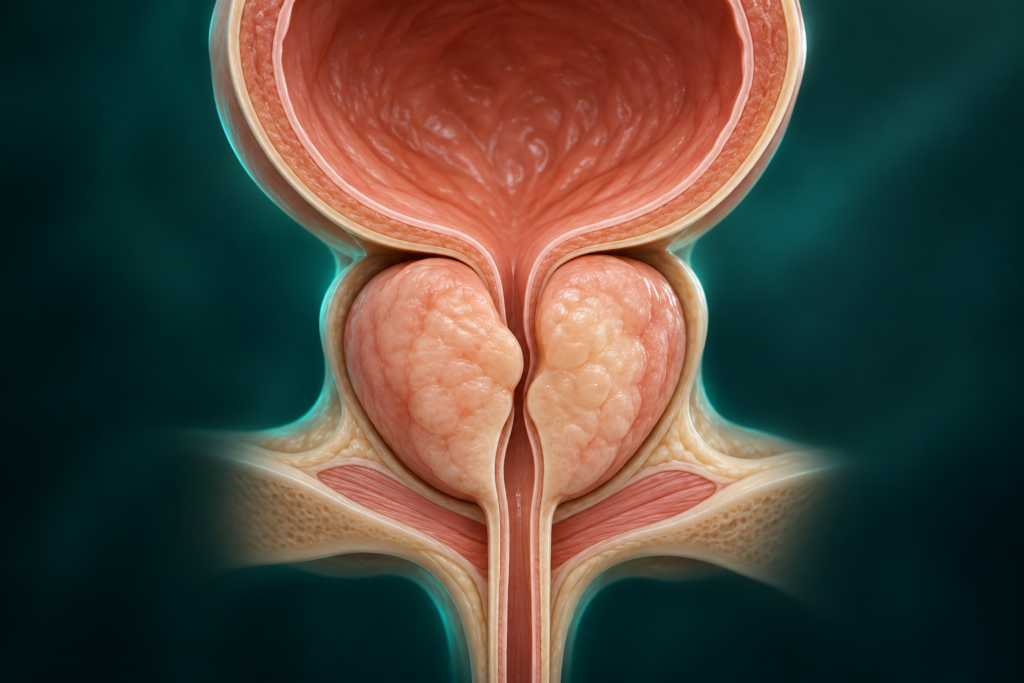
Understanding urinary symptoms in men
Lower urinary tract symptoms (LUTS) are common problems affecting the way men store and pass urine.
They include symptoms such as:
- Weak urine flow
- Difficulty starting urination
- Feeling that the bladder has not emptied fully
- Passing urine frequently
- Urinary urgency
- Waking at night to pass urine (nocturia)
- Urinary leakage
Although LUTS become more common as men get older, they are not simply an inevitable part of ageing. These symptoms often have an identifiable cause and, in many cases, can be significantly improved with the right treatment.
LUTS is not a diagnosis by itself. It is an umbrella term describing symptoms that may arise from problems affecting urine flow, bladder storage, bladder emptying, the prostate, urinary passage or pelvic floor.
Understanding the underlying cause is essential because treatment depends on the mechanism responsible for symptoms.
Mr Gidon Ellis is a Consultant Urological Surgeon specialising in male LUTS, benign prostate conditions and minimally invasive treatments. He provides comprehensive assessment to identify the underlying cause of symptoms and guide patients towards the most appropriate treatment.
What causes male lower urinary tract symptoms?
Male LUTS can arise from several different conditions. The most common causes include bladder outlet obstruction, bladder dysfunction, pelvic floor problems and narrowing of the urinary passage.
Bladder outlet obstruction (BOO)
Bladder outlet obstruction occurs when urine cannot flow freely from the bladder through the urethra.
In men, the most common cause is benign prostatic hyperplasia (BPH), also known as an enlarged prostate.
As the prostate enlarges, it can narrow the channel through which urine passes. Over time, this may make it increasingly difficult for the bladder to empty effectively.
Symptoms of bladder outlet obstruction may include:
- Weak urine stream
- Difficulty starting urination
- Straining to pass urine
- A stop-start flow
- Feeling that the bladder has not emptied completely
- Urinary retention
Other less common causes of bladder outlet obstruction include problems affecting the bladder outlet itself, such as bladder neck obstruction, or narrowing of the urethra (urethral stricture).
Related: Enlarged Prostate (BPH) · Bladder Outlet Obstruction · Urethral Stricture
Overactive bladder
Overactive bladder occurs when the bladder muscle becomes overactive during the filling phase.
Typical symptoms include:
- Sudden urgency to pass urine
- Passing urine frequently
- Waking at night to urinate
- Urgency-related urinary leakage
These symptoms do not always relate to the prostate. Careful assessment is important because urgency and frequency can occur with or without bladder outlet obstruction.
Related: Overactive Bladder
Underactive bladder
In some men, the bladder muscle becomes weaker and is unable to contract effectively.
This can lead to:
- Slow urinary flow
- Difficulty emptying the bladder
- High residual urine volumes
- Urinary retention
Established underactive bladder is difficult to reverse, which is why identifying and treating factors that may damage bladder function — particularly prolonged untreated bladder outlet obstruction — is so important.
Related: Underactive Bladder
Pelvic floor dysfunction and dysfunctional voiding
The pelvic floor muscles play an important role in controlling urination.
During normal urination, these muscles should relax to allow urine to pass.
If the pelvic floor does not relax appropriately, men may experience:
- Difficulty starting urine flow
- Stop-start flow
- Straining
- A sensation of incomplete emptying
Pelvic floor physiotherapy, including relaxation techniques, exercises and biofeedback, can be helpful for selected patients.
Urethral stricture
A urethral stricture is a narrowing of the urinary passage caused by scarring.
This can restrict urine flow and cause symptoms that can appear similar to prostate obstruction, including:
- Weak urine stream
- Spraying of urine
- Straining
- Incomplete emptying
Treatment depends on the location and severity of the narrowing.
Related: Urethral Stricture
Symptoms of male LUTS
Male LUTS are usually grouped into three categories.
Storage symptoms
These occur while the bladder is filling:
- Passing urine frequently
- Urinary urgency
- Waking at night to urinate (nocturia)
- Urgency-related urinary leakage
Related: Passing Urine Frequently, Urgently and During the Night · Nocturia · Urinary Incontinence
Voiding symptoms
These occur while passing urine:
- Weak urine flow
- Difficulty starting urination
- Straining
- Intermittent flow
- Prolonged time to empty the bladder
Related: Weak Urine Flow · Difficulty Emptying the Bladder
Post-micturition symptoms
These occur after urination:
- Feeling that the bladder has not emptied
- Dribbling after passing urine
Related: Difficulty Emptying the Bladder
How are male LUTS investigated?
A detailed assessment is essential because the same symptom can have different causes.
During consultation, Mr Ellis will discuss:
- The exact nature of your symptoms
- How they affect your quality of life
- Previous medical history and treatments
- Fluid intake and bladder habits
Investigations may include:
Urine testing
This helps identify infection, blood in the urine or other abnormalities.
Uroflowmetry (urine flow test)
This measures the speed and pattern of urine flow and provides information about bladder emptying and possible obstruction.
Bladder scan and post-void residual measurement
A bladder scan measures how much urine remains after passing urine.
This helps identify incomplete emptying and urinary retention.
PSA blood test and prostate assessment
Where appropriate, PSA testing and prostate assessment help evaluate prostate health and guide treatment decisions.
Imaging and specialist tests
Depending on the findings, further investigations may include:
- Ultrasound imaging
- Flexible cystoscopy
- Urodynamic testing in selected patients
- Specialist referral where additional assessment is required
Most initial investigations can usually be arranged as part of your assessment.
How are male LUTS treated?
Treatment depends on the underlying cause rather than simply treating the symptom.
Lifestyle measures
For some men, changes such as:
- Adjusting fluid intake
- Reducing caffeine and alcohol
- Bladder training
- Managing constipation
can improve symptoms.
Medication
Medication can be used to treat different causes of LUTS.
Examples include:
- Medicines that relax the prostate and improve urine flow
- Medicines that reduce prostate growth
- Medicines that calm an overactive bladder
The choice depends on the underlying cause, prostate size, bladder function and individual circumstances.
Related: Medication for LUTS
Pelvic floor physiotherapy
Specialist physiotherapy can help selected men with:
- Pelvic floor dysfunction
- Dysfunctional voiding
- Some urinary leakage problems
Treatment may include pelvic floor relaxation techniques, strengthening exercises where appropriate, and biofeedback.
Related: Pelvic Floor Physiotherapy
Posterior tibial nerve stimulation (PTNS)
PTNS is a minimally invasive treatment using gentle electrical stimulation of a nerve near the ankle to influence bladder function.
It can be useful for some patients with persistent overactive bladder symptoms.
Related: PTNS
Surgical procedures for bladder outlet obstruction
When LUTS are caused by significant prostate obstruction, minimally invasive procedures may be considered.
HoLEP (Holmium laser enucleation of the prostate)
A laser procedure that removes obstructing prostate tissue. It is highly durable and suitable for prostates of almost any size.
Related: HoLEP
Aquablation
A robotic waterjet treatment that removes obstructing prostate tissue while aiming to preserve sexual function.
Related: Aquablation
TURP
An established surgical treatment that removes obstructing prostate tissue.
Related: TURP
UroLift
A minimally invasive implant-based treatment designed to improve urine flow while preserving ejaculation in selected men.
Related: UroLift
Prostatic artery embolisation (PAE)
A minimally invasive treatment performed by specialist interventional radiologists that reduces blood supply to the prostate and gradually reduces prostate volume.
Related: PAE
When should men seek medical advice?
You should seek medical advice if urinary symptoms:
- Are affecting your quality of life
- Are worsening over time
- Are disturbing sleep
- Are associated with difficulty emptying the bladder
Prompt assessment is particularly important if you experience:
- Inability to pass urine (acute urinary retention)
- Blood in the urine
- Recurrent urinary infections
- New kidney problems
Why see Mr Ellis?
Male urinary symptoms can have many different causes. The most effective treatment begins with identifying the underlying problem.
Mr Gidon Ellis is a Consultant Urological Surgeon specialising in male LUTS, enlarged prostate and minimally invasive urological treatments.
He provides assessment across the full range of treatment options, helping patients understand the benefits, limitations and alternatives before making a decision.
Arrange a consultation
If you are experiencing urinary symptoms and would like specialist advice, Mr Ellis can provide a comprehensive assessment and discuss the most appropriate next steps.