

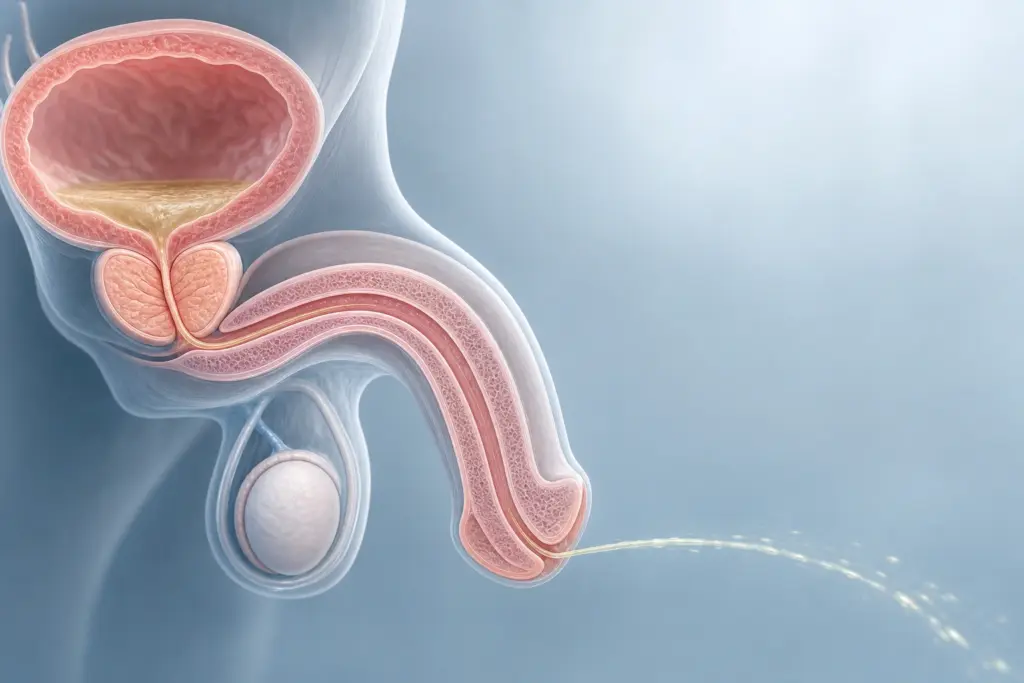
A common urinary symptom with many possible causes
Difficulty emptying the bladder is a common lower urinary tract symptom (LUTS) that can affect men of all ages. Some men describe a feeling that urine is left behind after passing urine, while others notice that they need to wait, strain or return to the toilet shortly afterwards. Although often associated with an enlarged prostate, there are several possible causes.
Identifying the reason behind poor bladder emptying is important because treatment depends on the underlying problem. Mr Gidon Ellis specialises in the assessment and treatment of male lower urinary tract symptoms, including symptoms related to bladder emptying, prostate enlargement and bladder function.
What does difficulty emptying the bladder feel like?
Symptoms may include:
- A sensation that the bladder has not fully emptied
- Needing to pass urine again shortly after finishing
- Taking a long time to empty the bladder
- Needing to strain to start or continue urination
- A stop-start urinary stream
- Passing only small amounts despite feeling the need to urinate
- Post-void dribbling (leakage after finishing)
- Reduced confidence in being able to empty the bladder fully
Some men have these symptoms alongside a weak urinary stream, while others notice incomplete emptying despite having a reasonable flow.
What causes difficulty emptying the bladder?
Difficulty emptying occurs when urine cannot leave the bladder effectively. This can happen because of a blockage, reduced bladder strength, or problems with coordination between the bladder and pelvic floor.
Enlarged prostate (benign prostatic hyperplasia)
The most common cause in older men is enlargement of the prostate. As the prostate grows, it can narrow the urethra and create resistance to urine flow. This is known as bladder outlet obstruction.
Symptoms may include:
- Difficulty starting urination
- Weak flow
- Straining
- A feeling of incomplete emptying
Treatment may include medication or, when appropriate, procedures such as HoLEP, Aquablation or TURP.
Urethral stricture
A narrowing of the urethra can restrict the passage of urine.
Possible causes include:
- Previous instrumentation or surgery
- Injury
- Infection or inflammation
A urethral stricture may cause:
- Reduced urinary flow
- Spraying of the urine stream
- Straining
- Incomplete emptying
Underactive bladder
The bladder muscle (detrusor muscle) needs to contract effectively to empty urine. In some people, the bladder muscle becomes weaker and does not generate enough pressure to empty completely.
This may be associated with:
- Increasing age
- Diabetes
- Neurological conditions
- Previous pelvic surgery
Pelvic floor dysfunction
The pelvic floor muscles need to relax during urination. If these muscles remain tense or do not coordinate properly with the bladder, emptying can become difficult. Pelvic floor physiotherapy may be helpful in selected patients.
When should I seek medical advice?
You should seek assessment if difficulty emptying the bladder is:
- New or worsening
- Affecting quality of life
- Associated with recurrent urine infections
- Associated with increasing residual urine after passing urine
Seek urgent medical advice if you are unable to pass urine at all, as acute urinary retention requires prompt treatment. Long-standing difficulty emptying the bladder should also be assessed, as significant residual urine can increase the risk of urinary tract infections, bladder problems and, in some cases, pressure-related kidney damage.
How is difficulty emptying the bladder investigated?
Assessment begins with a detailed discussion of symptoms and medical history.
Investigations may include:
Urine testing
A urine test helps identify infection, blood or other abnormalities that may contribute to symptoms.
Uroflowmetry (urine flow test)
This measures the speed and pattern of urine flow and can provide important information about bladder emptying.
Bladder scan
A bladder scan after urination measures the post-void residual urine volume — the amount of urine left behind. This is a simple, painless test that helps determine whether the bladder is emptying effectively.
Prostate assessment
Where appropriate, prostate size and symptoms are assessed to determine whether prostate enlargement is contributing.
Further investigations
Depending on the findings, additional tests may include:
- Ultrasound imaging
- Flexible cystoscopy
- Specialist bladder function testing arranged with an appropriate colleague
How is difficulty emptying the bladder treated?
Treatment depends on the underlying cause.
Enlarged prostate
Options may include:
- Lifestyle measures
- Medication
- Minimally invasive procedures such as HoLEP, Aquablation or TURP
Urethral narrowing
Treatment may involve procedures to open or reconstruct the narrowed area.
Pelvic floor dysfunction
Pelvic floor physiotherapy may help improve muscle coordination and relaxation.
Underactive bladder
Management focuses on improving bladder emptying, reducing complications and tailoring strategies to the individual situation.
Why choose Mr Ellis?
Difficulty emptying the bladder can have several different causes, and successful treatment depends on identifying the underlying problem. Mr Ellis provides specialist assessment of male urinary symptoms, combining clinical assessment with targeted investigations to understand whether symptoms are related to the prostate, bladder function, urethra or pelvic floor.
Treatment recommendations are personalised, balancing symptom improvement, long-term outcomes and the least invasive approach likely to provide benefit.
Frequently asked questions
Is difficulty emptying the bladder always caused by an enlarged prostate?
No. Although an enlarged prostate is a common cause in older men, other causes include urethral narrowing, weak bladder contraction and pelvic floor dysfunction.
Can medication improve bladder emptying?
Yes, if the problem is caused by prostate-related obstruction. However, medication will not correct every cause of poor bladder emptying.
Can difficulty emptying the bladder damage the kidneys?
In some cases, chronic urinary retention can cause increased pressure within the urinary system, which may affect kidney function if not recognised and treated appropriately. This is why persistent difficulty emptying should be assessed.
What happens if I cannot empty my bladder at all?
Complete inability to pass urine (acute urinary retention) requires urgent medical attention and usually needs prompt bladder drainage with a catheter.
Arrange a consultation
If you are struggling with incomplete bladder emptying, a weak stream or difficulty passing urine, Mr Gidon Ellis can provide specialist assessment to identify the cause and discuss appropriate treatment options. A consultation can help clarify whether symptoms are related to the prostate, bladder function or another condition.