

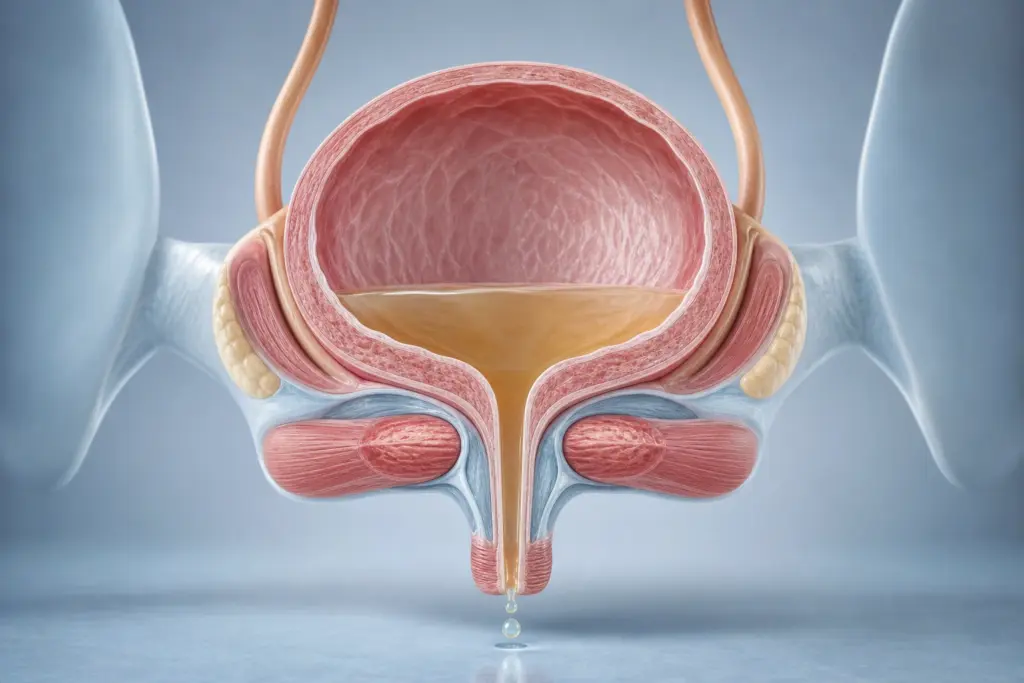
Understanding urinary leakage and how it can be treated
Mr Gidon Ellis is a Consultant Urological Surgeon in London specialising in the assessment and treatment of male urinary incontinence and other lower urinary tract conditions. He provides comprehensive evaluation to identify the underlying cause of urinary leakage and offers personalised, evidence-based treatment tailored to each patient.
Urinary incontinence is the involuntary leakage of urine. It is a common problem that can affect men of all ages and often has a significant impact on confidence, work, exercise and quality of life. Although many men feel embarrassed to discuss it, urinary incontinence is usually treatable once the underlying cause has been identified.
What is urinary incontinence?
Urinary incontinence means leaking urine when you do not intend to. The amount of leakage varies from occasional dribbles to larger episodes that require pads or protective clothing.
Urinary incontinence is not a condition in itself but a symptom that can have several different causes. Identifying the type of incontinence is the key to choosing the most effective treatment.
What are the different types of urinary incontinence?
Urgency incontinence
Urgency incontinence occurs when a sudden, overwhelming urge to pass urine is followed by leakage before reaching the toilet. It is commonly associated with an overactive bladder, where the bladder muscle contracts unexpectedly during the filling phase.
Stress urinary incontinence
Stress urinary incontinence occurs when urine leaks during activities that increase pressure within the abdomen, such as coughing, sneezing, laughing or exercise. In men, this most commonly occurs following prostate surgery, although weakness of the urinary sphincter or pelvic floor muscles can also contribute.
Overflow incontinence
Overflow incontinence develops when the bladder does not empty properly and becomes overfilled. Small amounts of urine leak because the bladder is unable to empty effectively.
- Common causes include:
- Enlarged prostate
- Bladder outlet obstruction
- Underactive bladder
Mixed urinary incontinence
Some men experience a combination of urgency and stress incontinence, requiring treatment directed at both problems.
What causes urinary incontinence?
The underlying cause depends on the type of leakage.
- Common causes include:
- Overactive bladder
- Enlarged prostate
- Bladder outlet obstruction
- Urinary retention
- Underactive bladder
- Weakness of the urinary sphincter
- Pelvic floor dysfunction
- Previous prostate or pelvic surgery
- Neurological conditions affecting bladder control
When should I seek medical advice?
Any persistent urinary leakage should be assessed, even if it is only occasional.
- You should arrange a specialist assessment if:
- Leakage is affecting your daily life
- You need to wear pads
- Symptoms are becoming more frequent
- You have difficulty emptying your bladder
- Leakage began after prostate surgery
- You should seek urgent medical advice if urinary leakage is accompanied by:
- New weakness or numbness in the legs
- Loss of bowel control
- Severe back pain
- Fever or feeling unwell
- Inability to pass urine
How is urinary incontinence investigated?
A careful history often provides the most important clues to the underlying cause.
- During your consultation, Mr Ellis will discuss:
- When leakage occurs
- Whether urgency is present
- Previous prostate or pelvic surgery
- Fluid intake
- Current medications
- Other urinary symptoms
- Investigations may include:
- Urine testing
- Bladder diary
- Uroflowmetry (urine flow test)
- Bladder scan to assess bladder emptying
- Ultrasound of the urinary tract where appropriate
- Flexible cystoscopy in selected patients
- Additional specialist bladder function tests where required
Many of these investigations can be arranged during your initial assessment.
Frequently asked questions
What is urinary incontinence?
Urinary incontinence is the involuntary leakage of urine. It can range from minor leakage to complete loss of bladder control.
How quickly can I be seen?
Appointments are arranged as quickly as possible, with urgent symptoms prioritised.
Do you accept my insurance?
Yes, we work with all major UK insurers. Please bring your policy and authorisation number to your appointment.
Will I see a consultant?
Yes, you’ll be seen directly by Mr Gidon Ellis at every appointment, not a member of his wider team.
Do I need a GP referral?
No, you do not need a GP referral for a private consultation. You can self-refer, and we can liaise with your GP afterwards if necessary.
Where will I be seen?
Consultations can take place at Welbeck London, The Wellington Hospital, or Royal Free London, based on your preference.
How should I prepare?
A few days of noting when leaks happen and what you were doing at the time can make your first appointment significantly more productive.
Urinary incontinence is thought to affect a substantial number of adults at some point in their lives, women more often than men, though it’s widely under-reported because people are reluctant to raise it.