

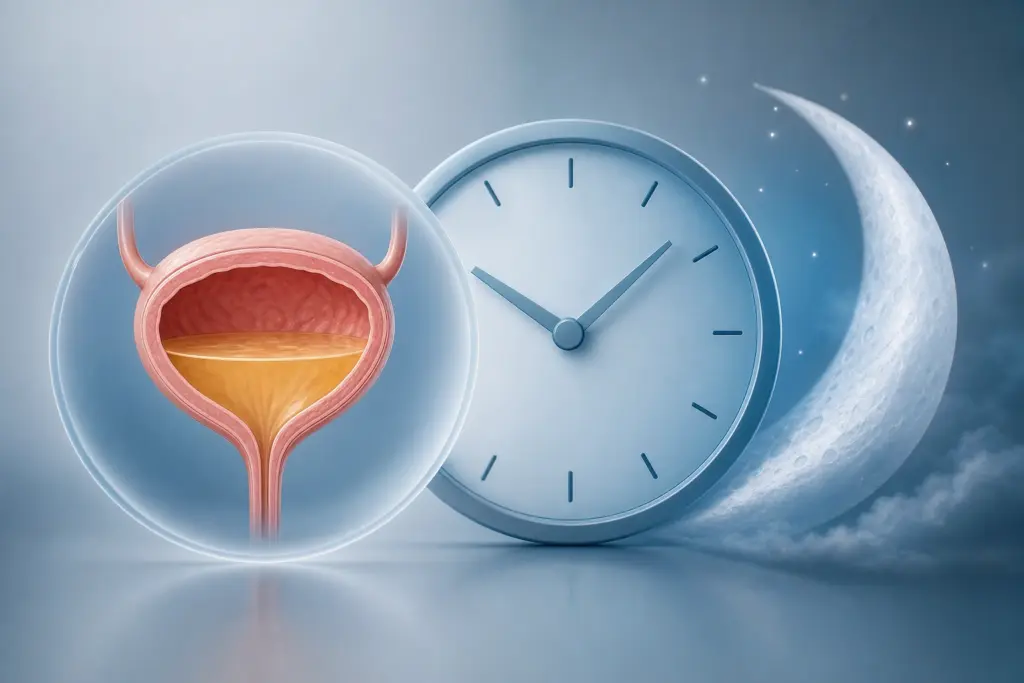
Understanding urinary frequency, urgency and nocturia in men
Mr Gidon Ellis is a Consultant Urological Surgeon in London specialising in the assessment and treatment of male lower urinary tract symptoms (LUTS), including urinary frequency, urgency and nocturia (waking during the night to pass urine).
Needing to pass urine frequently, experiencing a sudden urge to urinate or waking repeatedly during the night are extremely common symptoms. Although they can significantly affect sleep, confidence and quality of life, they are often very treatable once the underlying cause has been identified.
What do urinary frequency, urgency and nocturia mean?
These symptoms are often grouped together as storage symptoms because they occur while the bladder is filling.
Urinary frequency
This means needing to pass urine more often than usual during the day. The normal number of times someone passes urine varies depending on fluid intake, lifestyle and individual bladder capacity, but a significant increase from your usual pattern may warrant assessment.
Urinary urgency
Urgency is the sudden, difficult-to-control desire to pass urine. Some men feel they have very little warning before needing to reach a toilet, and in some cases urgency may be associated with leakage of urine (urge urinary incontinence).
Nocturia
Nocturia means waking during the night to pass urine. Occasional night-time urination is common, but repeated episodes can disrupt sleep and contribute to daytime tiredness, reduced concentration and a poorer quality of life.
What causes frequent urination and urgency?
There are many possible causes of urinary frequency, urgency and nocturia.
Overactive bladder
An overactive bladder occurs when the bladder muscle contracts involuntarily during filling, causing urgency, frequency and sometimes urinary leakage.
Enlarged prostate (benign prostatic hyperplasia)
An enlarged prostate can obstruct the flow of urine from the bladder. Over time, this may cause changes in bladder function, leading to overactivity and symptoms such as urgency, frequency and waking at night to pass urine.
Excess urine production at night (nocturnal polyuria)
Some men wake frequently because their body produces too much urine overnight rather than because the bladder itself is abnormal. Causes may include:
- Increasing age
- Evening fluid intake
- Peripheral oedema (fluid retention in the legs)
- Sleep disorders
- Certain medications
- Medical conditions affecting fluid balance
Urinary tract infection
A urine infection can cause sudden onset frequency, urgency, burning and discomfort when passing urine.
Lifestyle factors
- Symptoms may be worsened by:
- High fluid intake
- Caffeine
- Alcohol
- Fizzy drinks
- Drinking large volumes close to bedtime
Other causes
- Diabetes
- Bladder stones
- Bladder tumours (rare but important to exclude, especially if blood in the urine is present)
- Ureteric stones (can cause urinary frequency and urgency, particularly if the stone is near the bladder)
- Neurological conditions affecting bladder control
- Certain medications
When should I seek medical advice?
- You should arrange an assessment if:
- Your urinary symptoms are new or worsening
- You are waking regularly during the night to pass urine
- Urgency is affecting your daily activities or ability to travel
- Symptoms are affecting your sleep or quality of life
- You should seek more urgent medical advice if urinary symptoms are accompanied by:
- Fever or feeling unwell
- Severe pain
- Visible blood in the urine
- Sudden inability to pass urine
How are urinary frequency, urgency and nocturia investigated?
- The key to successful treatment is understanding the reason behind the symptoms. During your consultation, Mr Ellis will assess:
- The pattern and timing of your symptoms
- Fluid intake
- The number of times you pass urine during the day and night
- Any associated urgency or leakage
- Other urinary or medical symptoms
- Current medications
- Investigations may include:
- Bladder diary: recording fluid intake and the timing and volume of each visit to the toilet, usually over 2 to 3 days, often the single most useful tool for identifying whether the problem is overactivity, nocturnal polyuria, or a combination of both
- Urine testing: to check for infection, blood or other abnormalities
- Uroflowmetry: a flow test to assess how well the bladder is emptying
- Bladder scan: to measure how much urine remains after passing water
- Blood tests: where diabetes or kidney function need to be assessed
- Further investigations, such as ultrasound, flexible cystoscopy or urodynamic studies, if the initial assessment suggests a cause beyond an overactive bladder
Many patients can begin with simple, non-invasive assessment, with further tests reserved for those whose symptoms or initial findings suggest a more specific underlying cause.
Frequently asked questions
What is urinary frequency, urgency and nocturia?
Urinary frequency is passing urine more often than usual, urgency is a sudden, hard-to-control need to go, and nocturia is waking at night to pass urine. They’re grouped together because they all relate to how the bladder fills and stores urine.
How quickly can I be seen?
Appointments are arranged as quickly as possible, with urgent symptoms prioritised.
Do you accept my insurance?
Yes, we work with all major UK insurers. Please bring your policy and authorisation number to your appointment.
Will I see a consultant?
Yes, you’ll be seen directly by Mr Ellis at every appointment, ensuring you receive personalised care.
Do I need a GP referral?
Not for a private consultation. You are welcome to self-refer, and we can liaise with your GP afterwards if that’s helpful.
Where will I be seen?
You can choose from Welbeck London, The Wellington Hospital, or Royal Free London, whichever suits you best.
How should I prepare?
Keeping a short diary of your fluid intake and toilet trips for two to three days beforehand is genuinely useful, though not essential.