

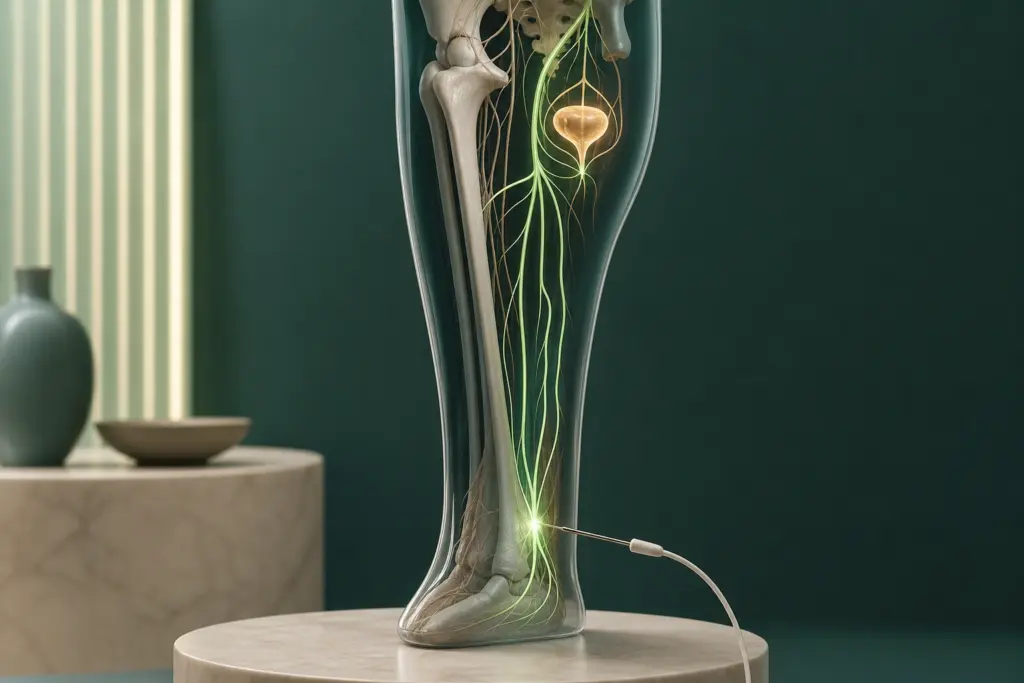
A minimally invasive treatment for urinary urgency, frequency and bladder control problems
Percutaneous tibial nerve stimulation (PTNS) is a minimally invasive treatment for overactive bladder symptoms. It uses gentle electrical stimulation of a nerve near the ankle to influence the nerve pathways that control bladder function. For selected patients, PTNS can reduce urinary urgency, frequency and urgency-related leakage without the need for medication or surgery.
Mr Gidon Ellis offers a comprehensive approach to managing male lower urinary tract symptoms (LUTS), including non-surgical treatments such as bladder retraining, pelvic floor physiotherapy and PTNS where appropriate.
What is PTNS?
PTNS involves placing a very fine needle electrode near the tibial nerve, which runs close to the ankle. A mild electrical signal is then delivered through the nerve. This travels along shared nerve pathways involved in bladder control and can help regulate abnormal bladder activity.
The treatment does not directly treat the prostate and does not remove any physical blockage to urine flow. It is primarily used for symptoms caused by an overactive bladder.
What symptoms can PTNS help?
PTNS may be considered for patients experiencing:
- Frequent urination
- Urinary urgency (a sudden, difficult-to-control need to pass urine)
- Waking at night to pass urine (nocturia)
- Urgency-related urinary leakage (urge incontinence)
These symptoms may occur on their own or as part of broader lower urinary tract symptoms.
Who may benefit from PTNS?
PTNS is usually considered when:
- Lifestyle measures and bladder retraining have not provided sufficient improvement
- Medication has not worked well enough
- Medication side effects are troublesome
- A patient prefers to avoid or delay more invasive treatments
It may be suitable for both men and women with overactive bladder symptoms.
What happens during PTNS treatment?
PTNS is performed as an outpatient treatment and does not require a general anaesthetic.
During treatment:
- A fine needle electrode is placed near the ankle, close to the tibial nerve.
- A small electrical current is applied.
- The stimulation is adjusted to a comfortable level.
Most patients feel a mild tingling sensation in the foot or ankle. Each session usually takes around 30 minutes.
How many treatments are needed?
PTNS is usually delivered as an initial course of weekly treatments, commonly involving around 12 sessions. Patients who respond may then require less frequent maintenance treatments to maintain the benefit. The response varies between individuals, and treatment is continued based on improvement in symptoms and quality of life.
What are the benefits of PTNS?
Potential benefits include:
- No medication-related side effects
- No need for surgery
- No general anaesthetic
- Suitable for patients who cannot tolerate or do not wish to take medication
- Can improve urgency, frequency and urgency-related leakage in selected patients
Are there any risks or side effects?
PTNS is generally well tolerated.
Possible side effects include:
- Temporary discomfort at the needle site
- Mild bruising or irritation
- Temporary tingling or altered sensation around the ankle or foot
Serious complications are uncommon.
How does PTNS compare with other treatments for overactive bladder?
Treatment depends on the severity of symptoms, previous treatments and individual preferences.
Options may include:
Lifestyle changes and bladder retraining
Often the first step and may include:
- Adjusting fluid intake
- Reducing bladder irritants such as caffeine
- Timed voiding strategies
- Urgency suppression techniques
Medication
Medicines such as antimuscarinics and beta-3 agonists may improve overactive bladder symptoms.
PTNS
A minimally invasive treatment that may be suitable when medication is ineffective, poorly tolerated or not preferred.
Other treatments
For selected patients with persistent symptoms, other options may include bladder Botox injections or specialist assessment with further investigations.
When is PTNS not the right treatment?
PTNS is not designed to treat symptoms caused by a physical blockage to urine flow. For example, men with significant bladder outlet obstruction from an enlarged prostate may require treatment directed at the obstruction itself, such as HoLEP, Aquablation or TURP. A specialist assessment helps determine the underlying cause of symptoms and identify the most appropriate treatment.
Why choose Mr Ellis?
Overactive bladder symptoms can have a significant impact on quality of life, sleep and daily activities. Mr Ellis provides a comprehensive assessment of lower urinary tract symptoms, considering the full range of treatment options from lifestyle measures and medication through to minimally invasive therapies. Treatment recommendations are personalised, taking into account symptoms, previous treatments and individual priorities.
PTNS at a glance
| Full name | Percutaneous Tibial Nerve Stimulation |
|---|---|
| Treats | Overactive bladder symptoms |
| Symptoms improved | Urgency, frequency, nocturia and urge incontinence |
| Anaesthetic | None |
| Hospital stay | Outpatient appointment |
| Treatment course | Usually weekly sessions initially, followed by maintenance if effective |
| Recovery | Immediate return to normal activities |
Frequently asked questions
Is PTNS painful?
Most patients describe PTNS as a mild tingling sensation rather than pain. The stimulation level is adjusted to ensure comfort.
Does PTNS work straight away?
Some patients notice improvement during the initial treatment course, while others require several sessions before benefits become apparent.
Can PTNS cure overactive bladder?
PTNS can significantly improve symptoms in some patients, but it is not considered a permanent cure. Maintenance treatment may be required to sustain improvement.
Is PTNS better than medication?
Neither treatment is universally better. The best option depends on symptoms, previous treatments, side effects and personal preferences.
Arrange a consultation
If you are struggling with urinary urgency, frequency or bladder control problems, Mr Gidon Ellis can assess whether PTNS or another treatment option may be suitable for you. A specialist assessment can help identify the cause of your symptoms and create a personalised treatment plan.