

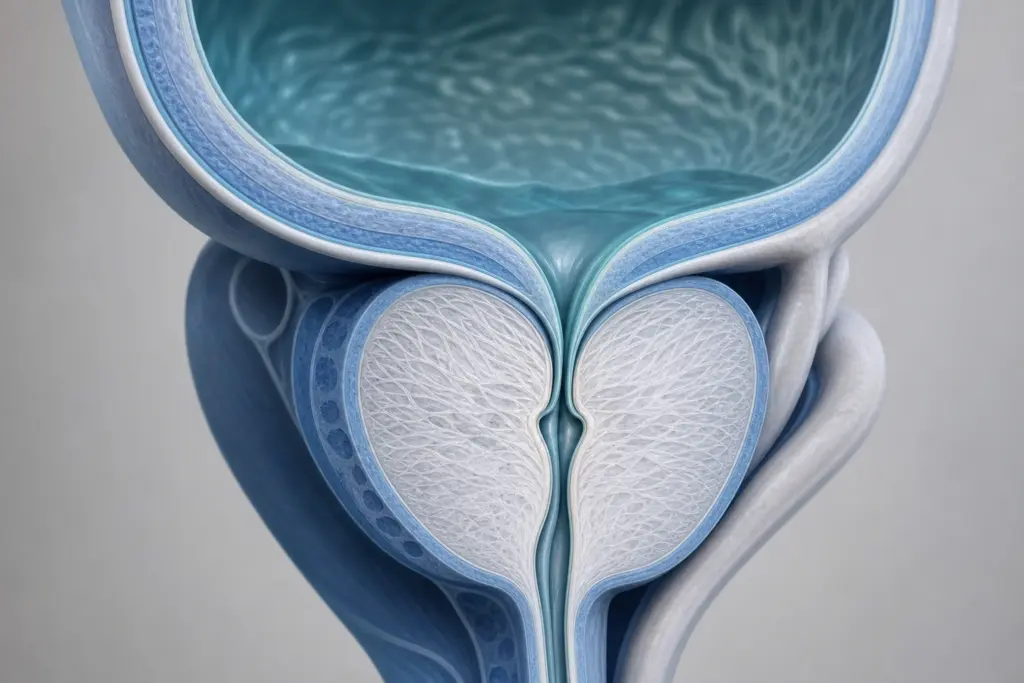
Understanding bladder outlet obstruction and how it is treated
Mr Gidon Ellis is a Consultant Urological Surgeon in London specialising in the diagnosis and treatment of bladder outlet obstruction and other male lower urinary tract conditions. He offers comprehensive assessment to identify the cause of urinary obstruction and provides the full range of evidence-based treatments, from medication through to minimally invasive surgery.
Bladder outlet obstruction (BOO) occurs when the flow of urine from the bladder is partially or completely blocked. It is not a diagnosis itself, but rather a term used to describe difficulty emptying the bladder caused by an underlying condition. Identifying the cause of bladder outlet obstruction is essential, as treatment depends on the reason for the blockage rather than the symptoms alone.
What is bladder outlet obstruction?
The bladder stores urine until it is convenient to empty. When you pass urine, the bladder muscle contracts while urine flows through the urethra. Bladder outlet obstruction occurs when something narrows or blocks this pathway, making it harder for urine to leave the bladder. As a result, the bladder has to work harder to empty. Over time, this may lead to troublesome urinary symptoms and, in some cases, complications such as urinary retention, recurrent infections or damage to bladder function.
What causes bladder outlet obstruction?
Several conditions can cause bladder outlet obstruction.
Enlarged prostate (benign prostatic hyperplasia)
The commonest cause in men is an enlarged prostate. As the prostate enlarges, it can compress the urethra and restrict the flow of urine. Not every man with an enlarged prostate develops bladder outlet obstruction, and the severity of symptoms does not always reflect the degree of obstruction.
Primary bladder neck obstruction
In some men, particularly younger men, the bladder neck does not open normally during urination despite there being no enlarged prostate.
Pelvic floor dysfunction
In some cases, the pelvic floor muscles do not relax appropriately during urination. This can interfere with the normal coordination of bladder emptying and may mimic or contribute to bladder outlet obstruction symptoms, even when there is no fixed anatomical blockage.
Urethral stricture
Scar tissue within the urethra can narrow the urinary passage, making it difficult for urine to flow normally.
Bladder stones
Occasionally, a bladder stone may obstruct the bladder outlet and interfere with normal bladder emptying.
Less common causes
Less commonly, bladder outlet obstruction may be caused by prostate cancer, bladder tumours or previous pelvic surgery.
What are the symptoms?
Common symptoms include:
- A weak or slow urinary stream
- Difficulty starting urination (hesitancy)
- Straining to pass urine
- A stop-start urinary stream
- A feeling that the bladder does not empty completely
- Dribbling after passing urine
- Frequent urination
- Waking during the night to pass urine (nocturia)
What are the symptoms?
In more severe cases, bladder outlet obstruction can lead to:
- Your urinary stream has become progressively weaker
- You regularly feel your bladder does not empty properly
- You have recurrent urinary tract infections
- You have experienced urinary retention
- Your urinary symptoms are affecting your quality of life
You should seek urgent medical attention if you are suddenly unable to pass urine and have severe lower abdominal pain.
How is bladder outlet obstruction diagnosed?
The first step is confirming whether obstruction is present and identifying its cause. During your consultation, Mr Ellis will discuss your symptoms, their impact on your daily life, and any relevant medical history, including previous surgery, infections or urinary retention.
Investigations may include:
- Uroflowmetry – a urine flow test that measures the speed and pattern of your urinary stream
- Bladder scan – an ultrasound measurement of how much urine remains in the bladder after passing water
- Urine testing – to check for infection or other abnormalities
- Blood tests, including a PSA test where appropriate, to assess prostate and kidney function
- Prostate assessment, including a digital rectal examination and, where needed, imaging of the prostate
- Urodynamic studies – measuring bladder pressure and urine flow together, used when it is unclear whether symptoms are due to obstruction, an underactive bladder, or a combination of both
- Flexible cystoscopy – direct inspection of the urethra and bladder using a thin camera, to identify a stricture, bladder stone or other structural cause
- Ultrasound of the kidneys and bladder, particularly if there is concern about longstanding obstruction affecting kidney function
Not every patient requires every test – investigations are tailored to the individual, based on symptoms, examination findings and initial results.
How is bladder outlet obstruction treated?
Treatment depends on the underlying cause of the obstruction, and options range from simple monitoring to surgery.
- Medication – for BPH, tablets to relax the muscle at the bladder neck and prostate, or to shrink the prostate over time, are often effective as a first-line treatment
- Minimally invasive and surgical options for BPH – when medication is not sufficient or symptoms are severe, procedures such as HoLEP (Holmium Laser Enucleation of the Prostate) or Aquablation can remove obstructing prostate tissue with a fast recovery and durable results
- Treatment of urethral stricture – options range from dilatation to more definitive surgical reconstruction, depending on the length and location of the stricture
- Treatment of bladder stones – stones contributing to obstruction are usually removed, often at the same time as treating the underlying cause
- Catheterisation – if urinary retention occurs, a catheter provides immediate relief while further assessment and definitive treatment are arranged
- Management of pelvic floor dysfunction – may involve specialist physiotherapy or biofeedback rather than surgery
Wherever possible, the least invasive option that provides durable relief is recommended, and every step of the diagnostic and treatment pathway is explained clearly so you can make an informed decision about your care.
Frequently asked questions
What causes bladder outflow obstruction?
The most common cause of bladder outflow obstruction in men is benign prostatic hyperplasia (BPH). Other causes include urethral strictures, bladder stones, or neurological conditions that affect bladder function.
How can I manage symptoms at home?
Staying hydrated and avoiding caffeine can help manage mild symptoms. However, it is essential to consult with a healthcare professional for a proper diagnosis and treatment.
When should I seek medical advice?
If you experience any symptoms of bladder outflow obstruction, such as difficulty urinating or a weak urine stream, it is crucial to seek medical advice. Early intervention can prevent further complications.