

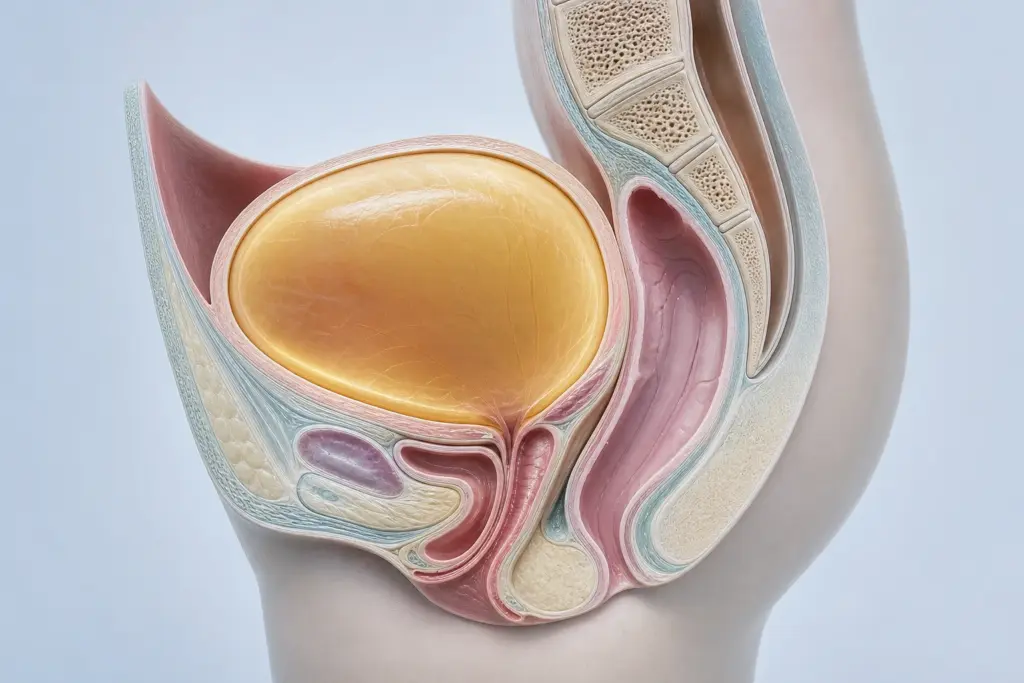
Understanding urinary retention and how it is treated
Mr Gidon Ellis is a Consultant Urological Surgeon in London specialising in the assessment and treatment of urinary retention and other male lower urinary tract conditions. He offers comprehensive investigation to identify the underlying cause and provides the full range of evidence-based treatments, from catheter management and medication through to minimally invasive surgery.
Urinary retention occurs when the bladder is unable to empty properly. It can develop suddenly as a painful emergency or gradually over months or years with few obvious symptoms. Although urinary retention can be alarming, effective treatments are available once the underlying cause has been identified.
What is urinary retention?
Urinary retention means that the bladder cannot empty completely.
There are two main types:
Acute urinary retention
Acute urinary retention is the sudden inability to pass urine despite having a full bladder. It is usually extremely painful and requires urgent treatment to drain the bladder with a catheter.
Chronic urinary retention
Chronic urinary retention develops gradually. The bladder continues to hold increasing amounts of urine after each void, often without causing pain. Some men have very few symptoms, while others notice a weak urinary stream, prolonged urination, frequent urination, nocturnal enuresis (involuntary leakage of urine during sleep), recurrent urinary tract infections or a feeling that the bladder never empties completely.
In some men, long-standing urinary retention causes increased pressure within the bladder. This pressure can be transmitted back to the kidneys, leading to swelling of the kidneys (hydronephrosis) and, if left untreated, permanent kidney damage. Identifying these patients promptly is an important part of specialist assessment.
What causes urinary retention?
Urinary retention is a symptom rather than a diagnosis. Several different conditions can prevent the bladder from emptying normally.
Bladder outlet obstruction
The most common cause of bladder outlet obstruction in older men is benign prostatic hyperplasia (BPH), where the prostate enlarges and compresses the urethra, restricting the flow of urine from the bladder.
Other causes of bladder outlet obstruction include:
- Urethral stricture
- Bladder neck narrowing
- Bladder stones blocking the outlet
- Rarely, prostate or bladder cancer
Underactive bladder
Sometimes the bladder muscle becomes too weak to empty the bladder effectively, even when there is no physical blockage. This may occur with increasing age, diabetes, neurological conditions or following prolonged bladder outlet obstruction.
Other causes
Urinary retention may also occur due to:
- Certain medications
- Severe constipation
- Following surgery or anaesthesia
- Urinary tract infection (less commonly)
What are the symptoms?
Symptoms vary depending on whether retention is acute or chronic.
Common symptoms include:
- Difficulty starting urination
- A weak or intermittent urinary stream
- Straining to pass urine
- A feeling of incomplete bladder emptying
- Frequent urination
- Waking during the night to pass urine
- Nocturnal enuresis (bedwetting)
- Recurrent urinary tract infections
Acute urinary retention causes severe lower abdominal discomfort together with an inability to pass urine and requires immediate medical attention.
When should I seek medical advice?
You should seek emergency medical attention immediately if you are unable to pass urine and have a painful, swollen bladder.
You should arrange a specialist assessment if you:
- Feel your bladder does not empty properly
- Have a progressively weaker urinary stream
- Develop recurrent urinary tract infections
- Have been found to have a large post-void residual urine volume
- Have abnormal kidney function or swelling of the kidneys (hydronephrosis)
- Have previously required a catheter for urinary retention
How is urinary retention investigated?
The aim of assessment is to determine why the bladder is not emptying properly and whether the problem is caused by bladder outlet obstruction, poor bladder muscle function or a combination of both. During your consultation, Mr Ellis will discuss your symptoms, medical history and previous urinary problems before performing an examination where appropriate.
Investigations may include:
- Urine testing
- Uroflowmetry (urine flow test)
- Bladder scan to measure the amount of urine remaining after voiding (post-void residual)
- PSA blood test where appropriate
- Ultrasound assessment of the kidneys and bladder
- Flexible cystoscopy to inspect the urethra and bladder
- Additional specialist bladder function tests where appropriate if the diagnosis remains unclear
Many investigations can be arranged during your initial assessment, allowing an accurate diagnosis and personalised treatment plan to be developed efficiently.
How is urinary retention treated?
Treatment depends entirely on the underlying cause.
Catheter drainage
Acute urinary retention is usually treated by inserting a catheter to drain the bladder. Once the bladder has recovered, a trial without catheter (TWOC) may be arranged where appropriate. Men with chronic urinary retention and evidence of kidney damage or high-pressure retention may also require catheter drainage to protect kidney function before definitive treatment.
Medication
If an enlarged prostate is responsible, medication may help relax the prostate or reduce its size, improving bladder emptying.
Surgery
Where bladder outlet obstruction is causing significant symptoms or complications, surgery may provide long-term relief.
Mr Ellis offers a full range of evidence-based minimally invasive surgical treatments, including:
- HoLEP (Holmium Laser Enucleation of the Prostate)
- Aquablation Therapy
- TURP (Transurethral Resection of the Prostate)
If urinary retention is caused by a urethral stricture or another condition, treatment will be tailored accordingly.
Why choose Mr Ellis?
Urinary retention often has more than one contributing factor. Successful treatment depends on identifying whether the problem is due to bladder outlet obstruction, impaired bladder muscle function or both.
Mr Ellis has a specialist interest in male lower urinary tract dysfunction and takes a comprehensive approach to assessing bladder emptying. Careful evaluation helps distinguish men who are likely to benefit from prostate surgery from those whose symptoms are primarily due to impaired bladder function or another underlying condition.
Patients benefit from access to modern diagnostic investigations and the full range of evidence-based treatments, with recommendations tailored to their individual circumstances.
Urinary retention at a glance
| Medical term | Urinary retention |
|---|---|
| Main symptoms | Sudden inability to pass urine or incomplete bladder emptying |
| Common causes | Enlarged prostate, bladder outlet obstruction and underactive bladder |
| Diagnosis | Consultation, uroflowmetry, bladder scan, ultrasound and cystoscopy where appropriate |
| Treatment | Catheter drainage, medication and surgery depending on the cause |
| Outlook | Most causes can be successfully treated once the underlying diagnosis has been established |
Frequently asked questions
Is urinary retention an emergency?
Acute urinary retention is a medical emergency because the bladder cannot empty and usually causes severe pain. Chronic urinary retention is often less urgent but should still be assessed promptly to prevent bladder damage, recurrent infections and, in some cases, kidney damage.
Will I need a catheter?
Not always. A catheter is usually required for acute urinary retention but may not be necessary in chronic retention if the bladder is still emptying reasonably well. The decision depends on your symptoms, bladder function and whether there is evidence of kidney damage.
Can urinary retention be cured?
In many cases, yes. If retention is caused by an enlarged prostate or another treatable obstruction, surgery can often restore bladder emptying. The outcome depends on both the underlying cause and how well the bladder muscle is functioning.
Can the bladder recover after urinary retention?
In many men it can. Recovery depends on how long the retention has been present and whether the bladder muscle has been permanently stretched or damaged. Early assessment and treatment generally improve the chances of recovery.
Arrange a consultation
If you have experienced urinary retention, difficulty emptying your bladder or have recently required a catheter, Mr Gidon Ellis offers specialist assessment and treatment in London. A consultation provides an opportunity to identify the cause of your urinary retention, assess bladder emptying and discuss the most appropriate treatment options to protect bladder and kidney function while restoring long-term urinary health.