

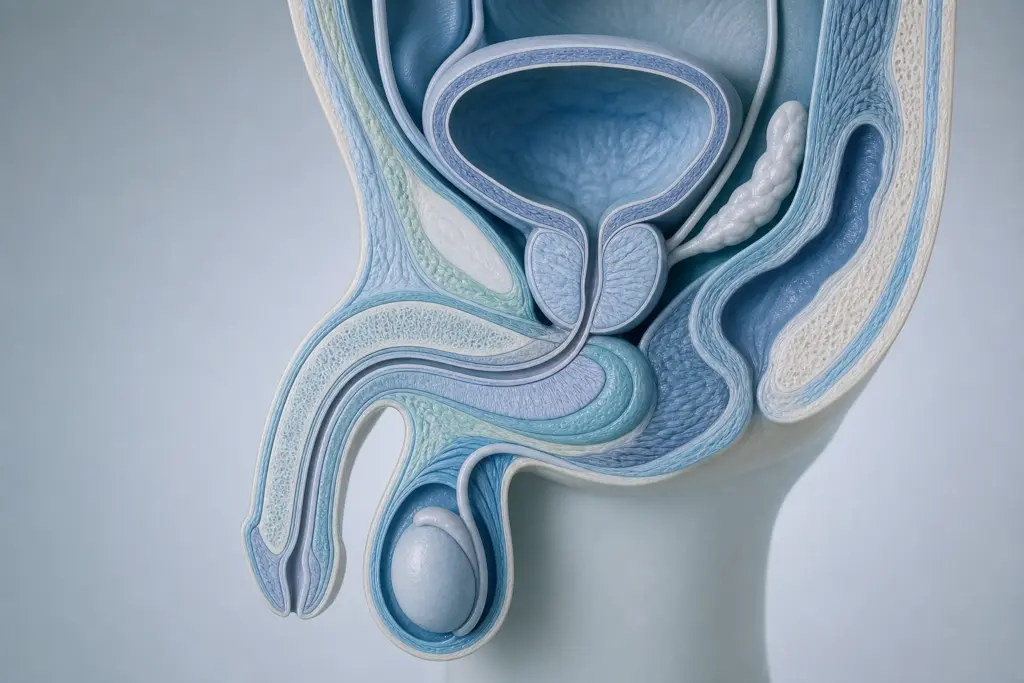
Understanding male urinary symptoms and finding the right treatment
Mr Gidon Ellis is a Consultant Urological Surgeon in London specialising in the assessment and treatment of male lower urinary tract symptoms (LUTS). He offers comprehensive evaluation to identify the underlying cause of urinary symptoms and provides the full range of evidence-based treatments, from lifestyle advice and medication through to minimally invasive surgery.
Lower urinary tract symptoms (LUTS) are extremely common, particularly as men get older. They are not a diagnosis in themselves, but rather a collection of symptoms that may have several different causes. Identifying the underlying cause is the key to choosing the most effective treatment, as set out in NICE guidance and by the British Association of Urological Surgeons.
What are lower urinary tract symptoms (LUTS)?
Lower urinary tract symptoms describe problems with the way the bladder stores urine or empties urine. Some men experience just one symptom, while others develop a combination that gradually affects their quality of life, sleep, work and confidence.
Although many men assume that all urinary symptoms are caused by an enlarged prostate, this is not always the case. Similar symptoms can also result from bladder dysfunction, overactive bladder, urinary infections, urethral strictures or neurological conditions. A careful assessment is therefore essential before deciding on treatment.
What symptoms are included in LUTS?
Urologists divide lower urinary tract symptoms into three groups.
Storage symptoms
These occur while the bladder is filling and storing urine and include:
- Passing urine more frequently than usual
- A sudden urge to pass urine (urgency)
- Needing to rush to the toilet
- Waking during the night to pass urine (nocturia)
- Urge urinary incontinence
Voiding symptoms
These occur while emptying the bladder and include:
- A weak or slow urinary stream
- Difficulty starting urination
- Straining to pass urine
- A stop-start urinary stream
- Taking a long time to empty the bladder
Post-micturition symptoms
These occur after passing urine and include:
- A feeling that the bladder has not emptied completely
- Dribbling after finishing urination
Many men experience symptoms from more than one group.
What causes male urinary symptoms?
Lower urinary tract symptoms can have many different causes.
Common causes include:
Enlarged prostate (benign prostatic hyperplasia)
The most common cause of urinary symptoms in men over 50 is benign enlargement of the prostate, which can narrow the urethra and obstruct urine flow. Further general information is available on the NHS website.
Overactive bladder
The bladder muscle becomes overactive, causing urgency, frequency and sometimes leakage, even when the bladder is not full.
Nocturnal polyuria
Some men produce an excessive volume of urine overnight, leading to repeated trips to the toilet despite otherwise normal bladder function.
Bladder outlet obstruction
Obstruction of urine flow may occur due to an enlarged prostate, urethral stricture or other less common conditions.
Underactive bladder
In some men, the bladder muscle is unable to contract effectively, leading to poor bladder emptying and a weak urinary stream.
Other causes
Urinary tract infections, bladder stones, neurological conditions and certain medications can also contribute to urinary symptoms.
When should I seek medical advice?
- Are unable to pass urine
- Develop fever or severe pain with urinary symptoms
- Notice visible blood in the urine
- Develop severe lower abdominal pain associated with difficulty passing urine
You should seek urgent medical attention if you:
You should arrange an assessment if urinary symptoms are becoming more frequent, disrupting your sleep or affecting your quality of life.
Common symptoms
- Frequent urination, often accompanied by urgency, particularly at night.
- A weak urine stream, straining, or a stop-start flow.
- Dribbling after urination or a feeling of incomplete bladder emptying.
- Discomfort or pain while passing urine.
- Visible blood in the urine, which requires immediate medical attention.
How is it diagnosed?
- Diagnosing lower urinary tract symptoms involves a comprehensive assessment. Mr Ellis will take a detailed history to differentiate between symptoms related to storage and those related to voiding. This distinction is crucial as it can indicate different underlying causes. Diagnostic tests typically include:
- A flow test to measure urine flow rate.
- A bladder scan to assess the amount of urine left in the bladder after urination.
- Urine testing to check for signs of infection or other abnormalities.
Additional evaluations such as prostate assessments or bladder imaging may be necessary based on initial findings. Most of these tests can be arranged during your first visit.
How we treat it
Treatment for lower urinary tract symptoms targets the identified cause rather than just alleviating symptoms. For instance:
- If an enlarged prostate is detected, minimally invasive surgical options like HoLEP or Aquablation may be recommended.
- If an overactive bladder is identified, treatment may begin with medication and bladder training techniques.
As of 2026, it is understood that men over 50 are particularly at risk, with 50% reporting some degree of LUTS. We prioritise the least invasive treatments that promise long-term relief, ensuring that patients are informed about every step of the process before making decisions.
Frequently asked questions
What Causes Lower Urinary Tract Symptoms?
Lower urinary tract symptoms can arise from several conditions, including urinary tract infections, prostate issues, or bladder dysfunction. Identifying the precise cause is essential for effective treatment.
How Common Are Lower Urinary Tract Symptoms?
Lower urinary tract symptoms are prevalent, affecting a significant portion of the population. Studies indicate about 20% of men and 10% of women will encounter these symptoms during their lives.
Further Information
For more detailed information on urinary health, visit the NHS website. If you are experiencing symptoms, book a consultation for a prompt assessment and clear treatment plan.